Shanghai vs Ningbo: Which Port Is Better for UAE Chemical Imports
Shanghai and Ningbo sit close enough to each other geographically that they're often treated as interchangeable, and for general containerized cargo, they frequently are. For chemical and bulk liquid shipments specifically, the two ports differ enough in infrastructure and specialization that the choice deserves a closer look rather than a coin flip.
This comparison looks at both ports across the factors that matter most for chemical importers shipping to the UAE: tank container infrastructure, routing options to Jebel Ali, handling and documentation requirements, and cost. It's written for procurement managers and supply chain decision-makers weighing where to route chemical cargo, not as a verdict that one port universally beats the other.
China–UAE Trade Routes and Port Guide: Ningbo, Shanghai, Shenzhen, Qingdao to Jebel Ali
Key Takeaways
- Both Shanghai and Ningbo offer meaningful chemical and bulk liquid export infrastructure, but the specific product and supplier location often decide which is the better fit for a given shipment.
- Ningbo's proximity to Zhejiang's chemical manufacturing base gives it an edge for tank container sourcing for products made in that region.
- Shanghai's larger overall port volume can mean more frequent sailing options and broader carrier choice, which matters for time-sensitive chemical shipments.
- Tank compatibility, cleaning, and certification requirements apply at both ports and should be confirmed for your specific product regardless of which port you choose.
- The better port for a specific shipment depends on supplier location, product type, and required sailing frequency more than a fixed cost or speed advantage.
Why This Comparison Matters for Chemical Importers
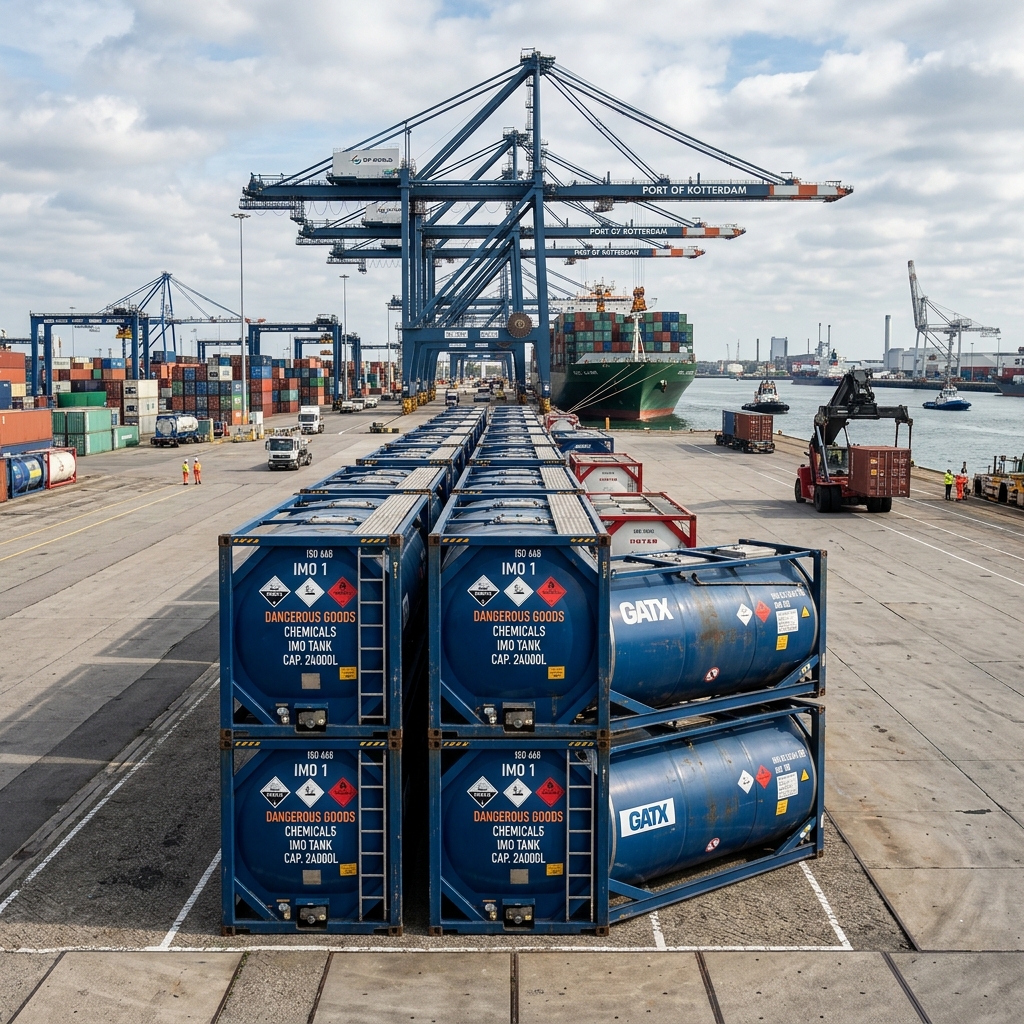
Chemical and bulk liquid cargo has requirements that standard containerized goods don't: compatible, properly cleaned ISO tank containers, dangerous goods classification and documentation where applicable, and handling procedures that account for product-specific hazards. Not every Chinese port offers the same depth of infrastructure to support these requirements, which makes port choice a more consequential decision for chemical shippers than it typically is for general cargo.
Tank Container Infrastructure
Ningbo
Ningbo's position within Zhejiang province, a region with substantial chemical manufacturing activity, has supported the growth of tank container depot and cleaning infrastructure around the port. For chemical products manufactured in or near this region, tank sourcing and cleaning turnaround tend to be more straightforward than routing the same product to a more distant port.
Shanghai
Shanghai also has established tank container infrastructure, given its position as China's largest port overall and its proximity to the same broader Yangtze Delta chemical manufacturing base. For products manufactured closer to Shanghai than to Ningbo specifically, or for shippers who need access to a wider range of tank types and cleaning facilities, Shanghai's larger scale can be an advantage.
Routing Options to Jebel Ali
Ningbo
Ningbo offers both direct and transshipment routing options to Jebel Ali, with sailing frequency that depends on current carrier deployment. It's a well-established origin point for Middle East-bound cargo generally, not just chemical shipments specifically.
Ningbo to Jebel Ali: Transit Times, Costs, and Route Options
Shanghai
Shanghai, as China's highest-volume port, typically offers a broader range of carrier and sailing options toward the Middle East than most other Chinese ports. For shippers who need frequent, predictable sailing windows, that breadth of options can translate into more flexibility when a specific sailing date needs to be hit.
Handling and Documentation Requirements
Both ports require the same core documentation for chemical cargo: accurate product classification, safety data sheets where applicable, dangerous goods declarations for products meeting IMDG criteria, and tank certification and cleaning records. Neither port has a meaningfully lighter documentation burden than the other; the difference is more about how efficiently that documentation gets processed given each port's familiarity with the specific product category.
Port-to-Port Documentation Checklist for China–UAE Ocean Freight
Cost Comparison
Base ocean freight rates between Shanghai and Ningbo to Jebel Ali tend to track closely, since the two ports are geographically close and often served by overlapping carrier networks. The more meaningful cost differences for chemical shippers usually come from inland transport to reach whichever port is closer to the actual manufacturing site, and from tank container availability, since sourcing a compatible tank from a more distant depot can add repositioning cost.
Side-by-Side Summary
| Factor | Shanghai | Ningbo |
|---|---|---|
| Overall port scale | Largest in China; broad carrier and sailing options | High volume; strong regional specialization |
| Tank container infrastructure | Well established, broader range | Well established, particularly for Zhejiang-origin products |
| Proximity to chemical manufacturing base | Yangtze Delta, broader region | Zhejiang province specifically |
| Sailing frequency to Jebel Ali | Generally high, given overall port volume | Strong, competitive with Shanghai on most routes |
| Best fit | Shippers needing broad carrier choice or sourcing from wider Yangtze Delta | Shippers sourcing specifically from Zhejiang-based chemical manufacturers |
Which Port Should You Choose?
Neither port is a universally better choice for UAE-bound chemical cargo. The more useful question is where your specific product is manufactured and what your sailing frequency needs are. A Zhejiang-based chemical manufacturer's cargo generally has a more direct path through Ningbo, both in terms of inland transport and tank sourcing. A manufacturer located closer to Shanghai, or a shipper who needs the broadest possible range of carrier and sailing options, may find Shanghai the more practical choice.
How to Choose the Right Chinese Port for Your UAE-Bound Cargo
For shippers with suppliers in both regions, splitting cargo across both ports based on each shipment's specific origin, rather than forcing everything through one port, is often the more efficient long-term approach.
Frequently Asked Questions
Is one port cheaper than the other for chemical shipments?
Base ocean freight rates tend to be similar between the two, given their geographic proximity and overlapping carrier coverage. Cost differences usually come down to inland transport distance to the port and tank container sourcing, both of which depend on where your specific product is manufactured.
Does either port have faster customs clearance on the export side?
Export clearance efficiency depends more on your forwarder's familiarity with the specific port and product category than on an inherent difference between the two ports. A forwarder with strong tank container experience at a given port will generally move documentation through more smoothly than one without that specific background, regardless of which port is used.
Can I use both ports depending on the shipment?
Yes. Many chemical importers with suppliers spread across the Yangtze Delta region use both ports, routing each shipment through whichever is closer to that specific supplier, rather than standardizing on one port for all cargo.
China–UAE Port Routing FAQ: Transit Times, Transshipment, and Delays
Port Congestion and Capacity Trends on the China–UAE Corridor in 2026
Conclusion: Match the Port to the Product, Not the Reputation
Shanghai and Ningbo both offer solid infrastructure for UAE-bound chemical and bulk liquid cargo, and the better choice for a given shipment depends on where the product is manufactured, what tank sourcing looks like for that specific product, and how much sailing flexibility the shipment needs. Treating this as a genuine comparison, rather than defaulting to whichever port is more familiar, tends to produce better outcomes for chemical importers over time.
Farway handles ISO tank container shipments from both Shanghai and Ningbo, with in-house UAE customs clearance at Jebel Ali for chemical and bulk liquid cargo.
Ready to move forward? [Request a cargo assessment](/contact or quote request page)