
How to Choose the Right Chinese Port for Your UAE-Bound Cargo
The Chinese port you ship from doesn't just affect which vessel your cargo boards. It affects inland transport cost, sailing frequency, dangerous goods and project cargo capacity, and how much flexibility you have if a route needs to change mid-shipment. Choosing it well takes a handful of deliberate steps rather than defaulting to whatever a supplier has always used.
This guide walks through those steps in order, from mapping your supplier network to reassessing your choice as conditions change. It applies whether you're shipping standard containerized cargo or something more specialized, like dangerous goods, ISO tank containers, or breakbulk and project cargo bound for Jebel Ali.
China–UAE Trade Routes and Port Guide: Ningbo, Shanghai, Shenzhen, Qingdao to Jebel Ali
Key Takeaways
- Start port selection from where your goods are actually manufactured, not from habit or a supplier's default arrangement.
- Cargo type narrows your options before cost does. Dangerous goods, ISO tank containers, and project cargo all have port and vessel constraints standard containers don't.
- Sailing frequency matters as much as advertised transit time; a port with fewer, faster sailings can produce a longer real-world lead time than one with frequent, slightly slower service.
- Inland trucking or rail cost to reach the port can offset any ocean freight savings from choosing a more distant "better" port.
- Your forwarder's booking relationships and experience at a specific port affect how smoothly your cargo actually moves through it.
- Port choice isn't a one-time decision. Congestion and capacity conditions shift, and a route worth reassessing periodically beats one locked in indefinitely.
Step 1: Map Your Cargo to Where It's Actually Made
Before comparing ports, identify where your goods are produced or consolidated. If you source primarily from Guangdong-based factories, Shenzhen is likely your natural origin point. If your suppliers cluster around the Yangtze River Delta, Shanghai or Ningbo make more sense. Northern China manufacturing, including heavier industrial goods, often routes more efficiently through Qingdao.
This step sounds obvious, but importers working with multiple suppliers across different regions sometimes default to a single "usual" port for all their cargo, adding unnecessary inland transport distance and cost for shipments originating far from that port.
Shanghai vs Ningbo: Which Port Is Better for UAE Chemical Imports
Step 2: Identify Your Cargo Type's Routing Requirements
Standard containerized general cargo can move through nearly any of the four major ports without complication. Other cargo types narrow the field before cost or convenience even enter the conversation.
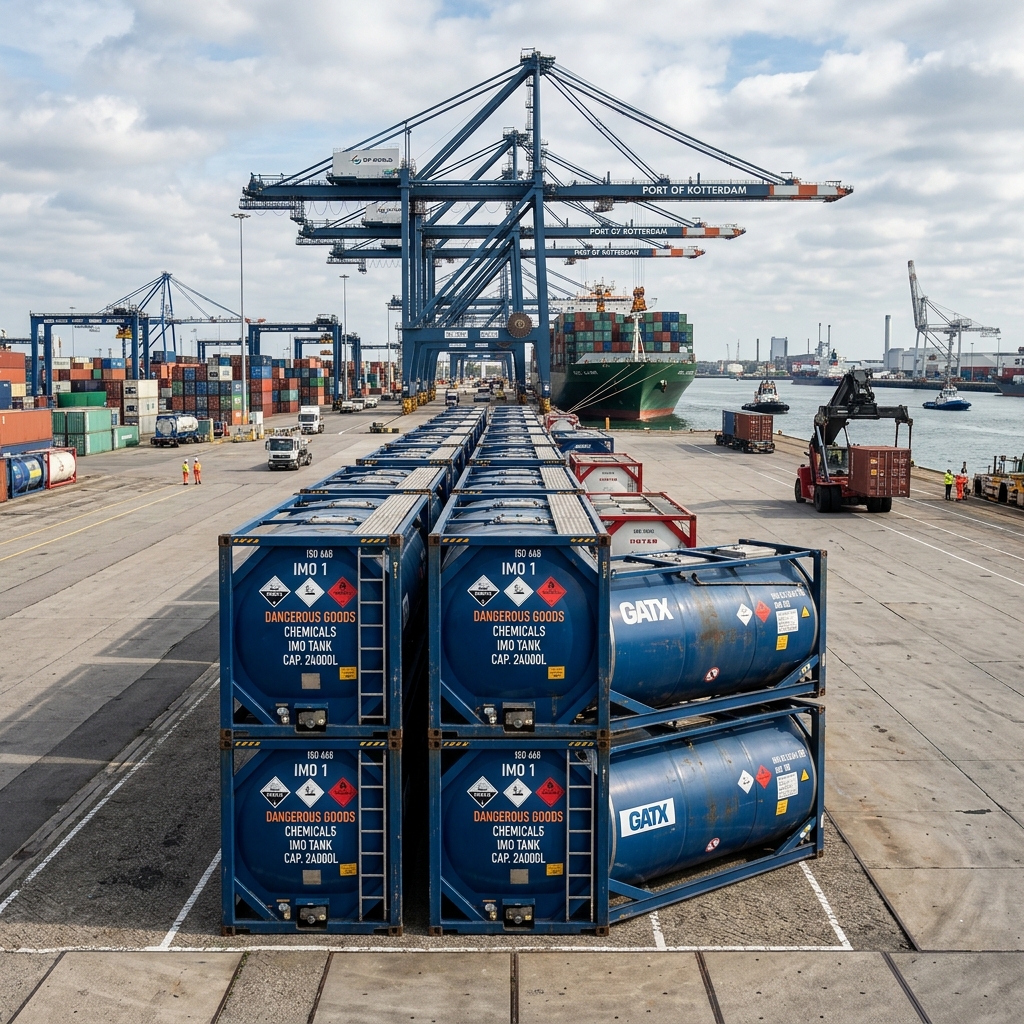
Dangerous goods depend on vessel dangerous goods quotas and port handling capability for hazardous cargo classes, which varies by port and even by terminal within a port. ISO tank container shipments depend on tank availability and cleaning infrastructure, which tends to be stronger in regions with established chemical and bulk liquid export volumes, notably around Ningbo and Shanghai. RoRo cargo depends on vessel schedules that run less frequently than standard container services. Breakbulk and project cargo depends on lift capacity and berth configuration suited to oversized freight, which not every port or terminal supports equally.
If your cargo falls into any of these categories, identify which ports can actually handle it before comparing them on cost or speed.
Step 3: Compare Sailing Frequency, Not Just Advertised Transit Time
A route advertised with a shorter transit time isn't automatically the faster real-world option. If that service only sails once every two or three weeks, your actual lead time depends on how your cargo readiness date lines up with the sailing schedule. A route with weekly departures and a slightly longer transit time can deliver goods sooner in practice, especially if you need recurring shipments on a predictable cadence.
Ask your forwarder for sailing frequency alongside transit time for any route you're evaluating, not transit time in isolation.
Ningbo to Jebel Ali: Transit Times, Costs, and Route Options
Step 4: Check Cargo-Specific Capacity Before You Commit
For dangerous goods, ISO tank containers, or project cargo, confirm capacity and compatibility before booking rather than after. Ask specifically: does this port and this vessel accept my dangerous goods classification at the volume I need to ship? Is a compatible, properly cleaned tank container available at this origin for my product? Does the vessel or terminal have the lift capacity my oversized cargo requires?
Skipping this step is one of the more common reasons a shipment gets delayed at the booking stage rather than in transit, since space or compatibility issues surface only once it's too late to easily switch ports.
Step 5: Factor in Inland Transport to the Port
Ocean freight rates get most of the attention, but the cost and time to move cargo from the factory to the port matters too. A port offering a marginally lower ocean rate isn't a better choice if it adds several hundred kilometers of inland trucking or an extra transload compared to a closer alternative. Calculate the full origin-to-vessel cost and lead time, not just the quoted ocean freight line item, before deciding a distant port is worth it.
Step 6: Confirm Your Forwarder's Experience at That Specific Port
General freight forwarding experience doesn't guarantee smooth handling at every port. Ask whether your forwarder has an established booking relationship and track record at the specific origin port you're considering, particularly for dangerous goods, tank containers, or project cargo, where local knowledge of terminal procedures and documentation requirements makes a measurable difference in how cleanly a shipment moves.
5 Mistakes Exporters Make Choosing a China–UAE Shipping Route
Step 7: Reassess the Choice Periodically, Not Just Once
Port and route conditions on the China–UAE corridor change over time. Congestion at a specific terminal, shifts in carrier vessel deployment, or seasonal demand swings can all change which port makes the most sense for your cargo from one quarter to the next. A port that was the right call last year isn't guaranteed to still be optimal today, so it's worth revisiting the decision periodically with your forwarder rather than treating it as settled permanently.
Port Congestion and Capacity Trends on the China–UAE Corridor in 2026
Putting It Together: A Simple Decision Order
In practice, these steps work best applied roughly in order. Start with where your goods are made, narrow to ports that can handle your specific cargo type, compare sailing frequency alongside transit time, verify cargo-specific capacity before booking, add inland transport cost and time into the comparison, confirm your forwarder's experience at the port in question, and revisit the decision periodically as conditions shift.
Frequently Asked Questions
Is Shanghai always the best choice because it's the largest port?
Not necessarily. Shanghai's size means broad connectivity and sailing options, but if your factory is located far from Shanghai, or your cargo type has better-suited infrastructure at another port, a smaller port closer to your supply chain can be the more efficient choice.
How much does inland transport typically add to the total cost?
It varies significantly by distance and cargo type, and it's not something to estimate without a current quote for the specific route. The key point is that it needs to be added to the ocean freight comparison rather than left out of the decision.
Can I split shipments across multiple ports if my suppliers are spread out?
Yes, and for importers with genuinely distributed supplier networks, this is often more efficient than consolidating everything at one port purely for simplicity. It does add coordination complexity, which is where a forwarder with multi-port booking relationships adds value.
Conclusion: Port Choice Is a Process, Not a Default
Choosing the right Chinese port for UAE-bound cargo comes down to matching supplier location, cargo type, and timeline requirements against what each port and route option can actually deliver, then revisiting that choice as conditions change. Skipping straight to a cost comparison without working through cargo-specific constraints first is the most common way this decision goes wrong.
If you want a port and routing recommendation based on your specific supplier locations and cargo type, Farway's team can assess your current setup and suggest where adjustments would help.
Ready to move forward? [Request a cargo assessment](/contact or quote request page)