Key Route-Planning Mistakes Exporters Make on China–UAE Trade Lanes
Route selection mistakes on the China–UAE corridor rarely announce themselves at booking time. They show up weeks later as a missed delivery window, an unexpected cost line, or a shipment that can't move on the sailing it was booked for. Most of them are avoidable with a bit more diligence at the planning stage.
This article covers five routing mistakes that come up repeatedly among China–UAE exporters and importers, along with what to do instead.
China–UAE Trade Routes and Port Guide: Ningbo, Shanghai, Shenzhen, Qingdao to Jebel Ali
Key Takeaways
- Defaulting to the same port for every shipment regardless of supplier location adds unnecessary inland transport cost and time.
- Booking dangerous goods or project cargo too close to the sailing date is one of the most common causes of last-minute rerouting.
- Chasing the shortest advertised transit time while ignoring sailing frequency can produce a longer real-world lead time.
- Treating Jebel Ali as the only viable UAE destination overlooks cases where another port fits the cargo or destination better.
- Locking in a route once and never revisiting it means missing shifts in congestion, capacity, or pricing that change which option is best.
Mistake 1: Defaulting to One Port Regardless of Supplier Location
Many importers pick a single "usual" Chinese port and route every shipment through it, even when suppliers are spread across different regions. This adds inland trucking distance and time for any factory that isn't actually near that port, and it can erase whatever ocean freight advantage the chosen port offers.
The fix is straightforward: map cargo to the port closest to where it's actually manufactured or consolidated, and be willing to use more than one origin port if your supplier base is genuinely distributed.
How to Choose the Right Chinese Port for Your UAE-Bound Cargo
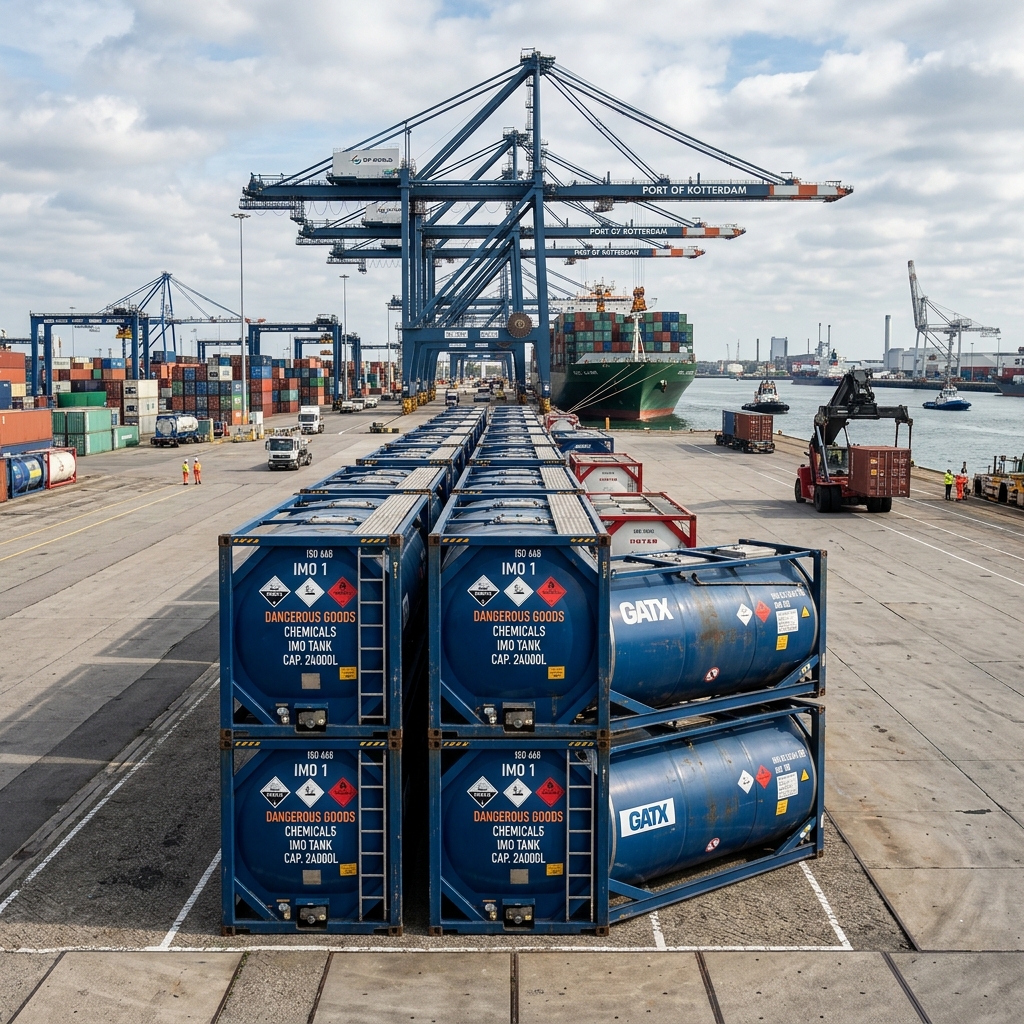
Mistake 2: Booking Dangerous Goods or Project Cargo Too Close to the Sailing Date
Standard containerized cargo can often be booked on relatively short notice, but dangerous goods and project cargo can't be treated the same way. Dangerous goods depend on vessel quotas by hazard class that fill up ahead of the sailing, and project cargo depends on lift capacity and berth configuration that isn't available on every service. Booking these cargo types with the same lead time as a standard container shipment is a common way to discover, too late, that the intended sailing simply can't take the cargo.
The fix is to confirm cargo-specific capacity, whether that's a dangerous goods slot, tank availability, or lift capacity, before treating a route as locked in, and to build in enough lead time for these cargo types specifically.
Mistake 3: Chasing the Shortest Advertised Transit Time
A route advertised with the shortest transit time looks like the obvious choice on paper, but if that service sails infrequently, the real-world lead time can end up longer than a route with a marginally longer transit time and weekly departures. Comparing routes on advertised transit time alone, without checking sailing frequency, is a common way to end up with a worse outcome than a slightly "slower" alternative would have delivered.
The fix is to always ask for sailing frequency alongside transit time, and to think in terms of realistic delivery date rather than the headline transit number.
Ningbo to Jebel Ali: Transit Times, Costs, and Route Options
Mistake 4: Assuming Jebel Ali Is the Only Viable UAE Destination
Jebel Ali handles the large majority of China-origin cargo entering the UAE, and defaulting to it isn't wrong most of the time. But for cargo destined for northern Emirates, or for shippers with existing bonded warehouse arrangements at another UAE port, routing everything through Jebel Ali by default can add unnecessary inland transport within the UAE after arrival.
The fix is to confirm final destination within the UAE before committing to a port, and to ask a forwarder whether an alternative UAE port would reduce total transit time or cost for that specific shipment.
Mistake 5: Never Revisiting the Route Once It's Been Chosen
Port and route conditions on the China–UAE corridor shift over time. Congestion at a specific terminal, changes in carrier vessel deployment, or seasonal demand swings can all change which routing makes sense from one shipping season to the next. Locking in a route once and never reassessing it means missing these shifts, sometimes for years, even as conditions on the ground change materially.
The fix is to build periodic route review into your shipping process, particularly ahead of peak shipping periods when congestion risk is typically highest.
Port Congestion and Capacity Trends on the China–UAE Corridor in 2026
How These Mistakes Compound
None of these five mistakes exist in isolation. An importer who defaults to one port regardless of supplier location is also more likely to be chasing the shortest advertised transit time without checking sailing frequency, since neither decision was made with full information about the alternatives. The common thread across all five is treating routing as a settled default rather than an active decision that deserves the same scrutiny as carrier selection or Incoterm negotiation.
Case Study: Rerouting a Shenzhen Shipment During Peak Season Congestion
What to Do Instead
A short pre-booking checklist covers most of what's needed to avoid these mistakes: confirm the origin port matches supplier location, confirm cargo-specific capacity for anything beyond standard containers, compare sailing frequency alongside transit time, confirm the destination UAE port fits final delivery location, and set a reminder to revisit the route ahead of the next peak shipping period.
Frequently Asked Questions
How much lead time does a dangerous goods shipment actually need?
It varies by hazard class, carrier, and current vessel capacity, so there's no single universal answer. The practical approach is to ask your forwarder to confirm vessel quota availability as early as possible in the planning process, well ahead of when you'd book a standard container shipment.
Is it ever worth paying more for a faster route?
Yes, for time-sensitive or high-value cargo, a faster and more reliable route can be worth a cost premium. The mistake isn't paying for speed; it's paying for advertised speed without checking whether sailing frequency actually delivers on that promise in practice.
Conclusion: Most Routing Mistakes Are Avoidable With a Checklist
These five mistakes share a common cause: treating route selection as a one-time, low-effort decision rather than something that deserves the same scrutiny given to cost negotiation or carrier selection. A short pre-booking checklist and a periodic review habit close most of the gap.
If a recent shipment ran into one of these issues, or you want a second look at your current routing setup, Farway's team can review your shipping pattern and flag where adjustments would help.
Ready to move forward? [Request a cargo assessment](/contact or quote request page)