China to UAE Shipping FAQ: Answers to the Questions Importers Ask Most
These are the questions that come up most often from importers and procurement managers new to the China–UAE lane, or managing it for the first time without an in-house logistics team. Each answer is meant to stand on its own, with links to deeper coverage where a topic warrants more detail.
For the full process these questions sit within, see the complete guide to shipping from China to the UAE.
Key Takeaways
- Transit time, cost, and documentation requirements vary by mode and cargo type; there's no single answer that applies to every shipment.
- Sea freight is the default for most cargo; air freight is worth the premium mainly for time-sensitive or high-value goods.
- Total landed cost includes more than the freight quote: handling charges, duty, VAT, and accessorial fees all factor in.
- Dangerous goods, ISO tank containers, RoRo, and breakbulk/project cargo each have distinct documentation and handling requirements.
- An in-house UAE clearance capability generally shortens resolution time on document corrections compared to a third-party agent handoff.
General Process Questions
How long does shipping from China to the UAE take?
It depends on the mode, the origin port, and whether the sea freight routing is direct or involves transshipment through a hub. Air freight is considerably faster than sea freight but at a much higher cost per unit. Confirm current transit times with your forwarder for the specific origin port and service, since schedules and available routings change.
Sea Freight vs Air Freight: China to UAE Shipping Compared
What's the difference between FCL and LCL?
FCL (full container load) gives your cargo exclusive use of an entire container, priced regardless of how full it is. LCL (less than container load) consolidates your cargo with other shippers' goods in a shared container, which lowers the per-unit cost for smaller volumes but adds consolidation and deconsolidation time at both ends.
What are Incoterms and why do they matter?
Incoterms, agreed on the purchase order, determine which party (you or your supplier) is responsible for freight booking, insurance, and customs clearance at each stage of the shipment. FOB and CIF are the most common choices on this lane. Getting this wrong can leave a shipment without a party authorized to book the vessel or clear customs at the destination.
Cost Questions
How much does it cost to ship from China to the UAE?
Total cost depends on mode, cargo volume, weight, and cargo type, and it includes more than the base freight rate: origin and destination handling, customs duty, VAT, and accessorial charges all factor into the final invoice. Request an itemized, all-in landed cost quote rather than relying on the base freight number alone.
China to UAE Freight Costs and Pricing in 2026: What Importers Should Expect
Are there hidden fees I should watch for?
Demurrage and detention charges, peak season surcharges, and bunker adjustment factors can all move the final invoice away from the initial quote. These aren't typically hidden in the sense of being undisclosed, but they're often left off an initial ballpark estimate because they fluctuate with market conditions and shipment timing.
Documentation and Compliance Questions
What documents do I need for a China-UAE shipment?
At minimum: a commercial invoice, packing list, bill of lading or air waybill, and certificate of origin, all matching each other on quantities, weights, and descriptions. Depending on the goods, additional UAE-specific documents like an import permit or product-specific certificate may apply.
The Essential Documentation Checklist for China-UAE Shipments
What causes the most delays at UAE customs?
Mismatches between the commercial invoice, packing list, and bill of lading are among the most common causes, along with missing or incorrect HS code classifications and, for regulated products, missing certificates or permits.
Do I need a customs broker, or does my forwarder handle that?
Many forwarders offer UAE customs clearance either in-house or through a third-party agent. In-house clearance, where the same company manages both freight and clearance, generally reduces the number of handoffs involved and shortens resolution time when a document needs correction.
Cargo-Specific Questions
Can I ship dangerous goods from China to the UAE?
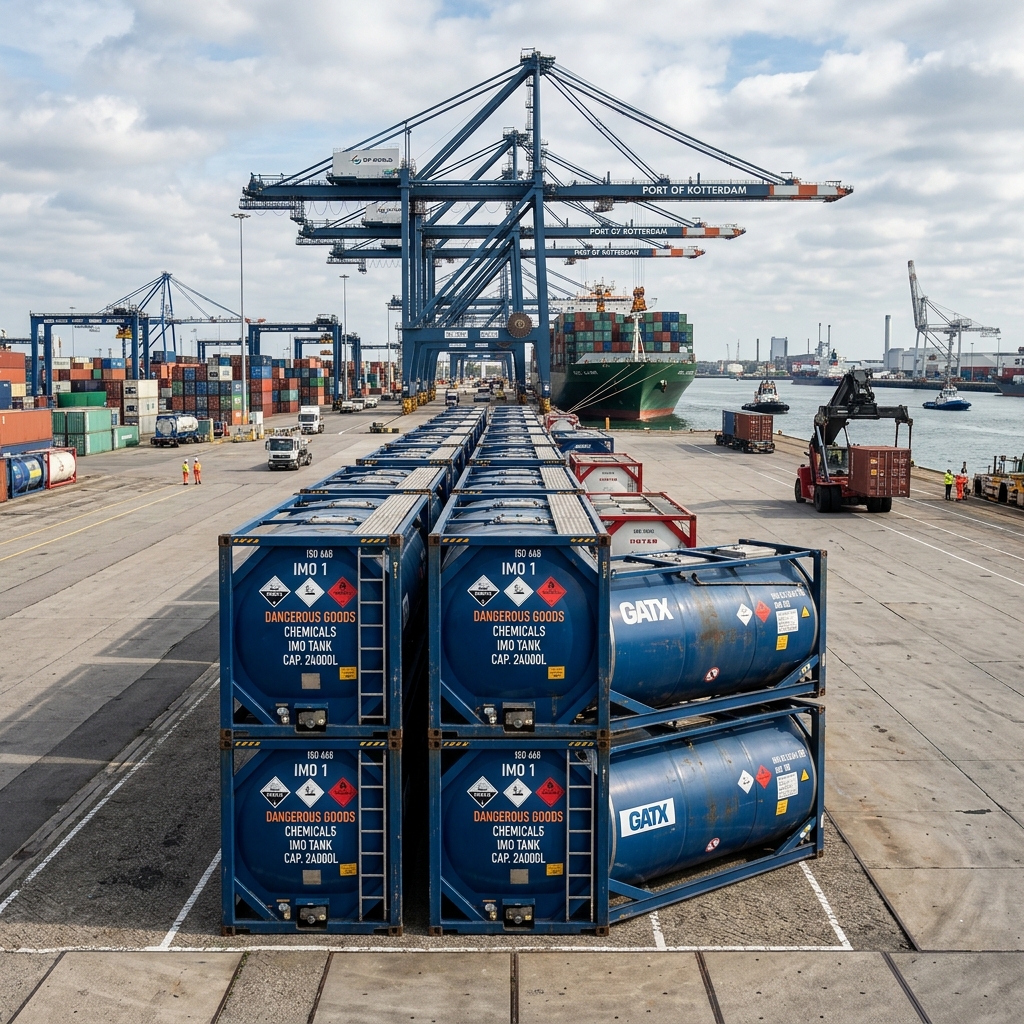
Yes, with proper classification under the IMDG Code, compliant packaging and labeling, and a dangerous goods declaration submitted alongside standard shipping documents. Carrier acceptance isn't automatic since vessels have limits on the type and volume of hazardous cargo they'll carry per voyage.
The Complete Guide to Shipping Dangerous Goods from China to the UAE
How do ISO tank container shipments work?
Bulk liquids, chemicals, food-grade products, and gases can move in ISO tank containers, which require tank certification, compatibility checks between the tank lining and the product carried, and documented cleaning records between uses.
What about oversized or heavy machinery?
Non-containerizable cargo, generators, industrial machinery, structural components, typically moves as breakbulk or project cargo, requiring engineered lifting plans and coordination with port authorities on crane capacity and berth availability ahead of arrival. Vehicles and self-propelled equipment generally move via RoRo instead.
Working With a Forwarder
How do I choose the right forwarder for this lane?
Look for direct experience with your specific cargo type, particularly if it involves dangerous goods, tank containers, or project cargo, and confirm whether UAE clearance is handled in-house or outsourced. Track record on the China–UAE corridor specifically matters more than general freight forwarding experience.
China-UAE Trade Trends to Watch in 2026
What should I ask before booking my first shipment?
Ask for an itemized landed cost estimate, confirm who holds responsibility under the agreed Incoterm, confirm documentation requirements specific to your cargo, and confirm expected transit time and communication practices during transit.
Conclusion: Most Answers Depend on Your Specific Cargo
Nearly every question on this list has the same underlying caveat: the answer depends on mode, cargo type, and current market conditions, not a single fixed number that applies to every shipment. When in doubt, confirm specifics with your forwarder for your exact cargo and route rather than assuming a previous shipment's terms still apply.
Ready to move forward? [Request a cargo assessment](/contact or quote request page)