
The Essential Documentation Checklist for China-UAE Shipments
Documentation errors are one of the most preventable causes of delay at UAE customs, and preventing them starts with knowing exactly what's needed before the cargo leaves China. This checklist walks through the core documents every shipment needs, the UAE-specific paperwork that applies depending on the goods, and the additional requirements for dangerous goods, tank containers, RoRo, and project cargo.
This checklist supports the process outlined in the complete guide to shipping from China to the UAE, and it's worth reviewing alongside your forwarder before each shipment, not just the first one.
Key Takeaways
- Every shipment needs, at minimum, a commercial invoice, packing list, bill of lading or air waybill, and certificate of origin, all matching each other precisely.
- UAE-specific requirements can include an import permit, a trade license reference, and product-specific certificates depending on the goods and importing entity.
- Dangerous goods, ISO tank containers, and breakbulk/project cargo each require documentation beyond the standard set.
- A pre-shipment cross-check, comparing every document line by line, catches most mismatches before they become a customs hold.
- Document accuracy matters more than document volume; three documents that match perfectly beat five documents with one inconsistency.
Core Shipping Documents (Every Shipment Needs These)
Commercial Invoice
The commercial invoice states the transaction value, buyer and seller details, product description, quantity, and terms of sale. It's the primary document customs uses for valuation, so it needs to accurately reflect what's actually being shipped, not a rounded or simplified version prepared for convenience.
Packing List
The packing list details how the cargo is packaged: carton or pallet counts, weights, and dimensions. It needs to match the commercial invoice's quantities exactly. A packing list showing a different unit count than the invoice is one of the more common triggers for a customs hold, even when the discrepancy is a clerical error rather than anything substantive.
Bill of Lading or Air Waybill
The bill of lading (sea freight) or air waybill (air freight) is the contract of carriage and the receipt for the cargo, issued by the carrier. It should match the commercial invoice and packing list on cargo description and, for FCL, container details.
Certificate of Origin
The certificate of origin confirms the country where the goods were manufactured or substantially transformed, which can affect duty treatment depending on applicable trade agreements. It's issued by a recognized chamber of commerce or trade body in the exporting country.
Cross-Checking These Four Documents Before Shipment
Before the cargo leaves China, compare all four core documents side by side: quantities, weights, product descriptions, and values should reconcile across every one of them. A discrepancy anywhere in this set is one of the most common reasons a shipment gets flagged for manual review at Jebel Ali, and it's almost always preventable with this single review step.
5 Common Mistakes Importers Make Shipping from China to the UAE
UAE-Specific Documentation
Import Permit
Certain product categories require an import permit before the shipment can clear customs. This applies more often to regulated goods, food, pharmaceuticals, certain electronics, and chemicals, than to general merchandise, but it's worth confirming for each shipment rather than assuming based on a previous one.
Trade License Reference
UAE customs clearance typically requires a reference to the importing entity's valid UAE trade license. Confirm this is current and matches the entity name on the commercial invoice before the shipment arrives.
Product-Specific Certificates
Depending on the product category, health certificates, safety certificates, or conformity certificates may be required. These vary by category and can change, so confirming current requirements with your forwarder before the shipment ships is more reliable than relying on what a similar shipment needed previously.
China to UAE Import Regulations and Compliance Explained
Cargo-Specific Documentation
Dangerous Goods
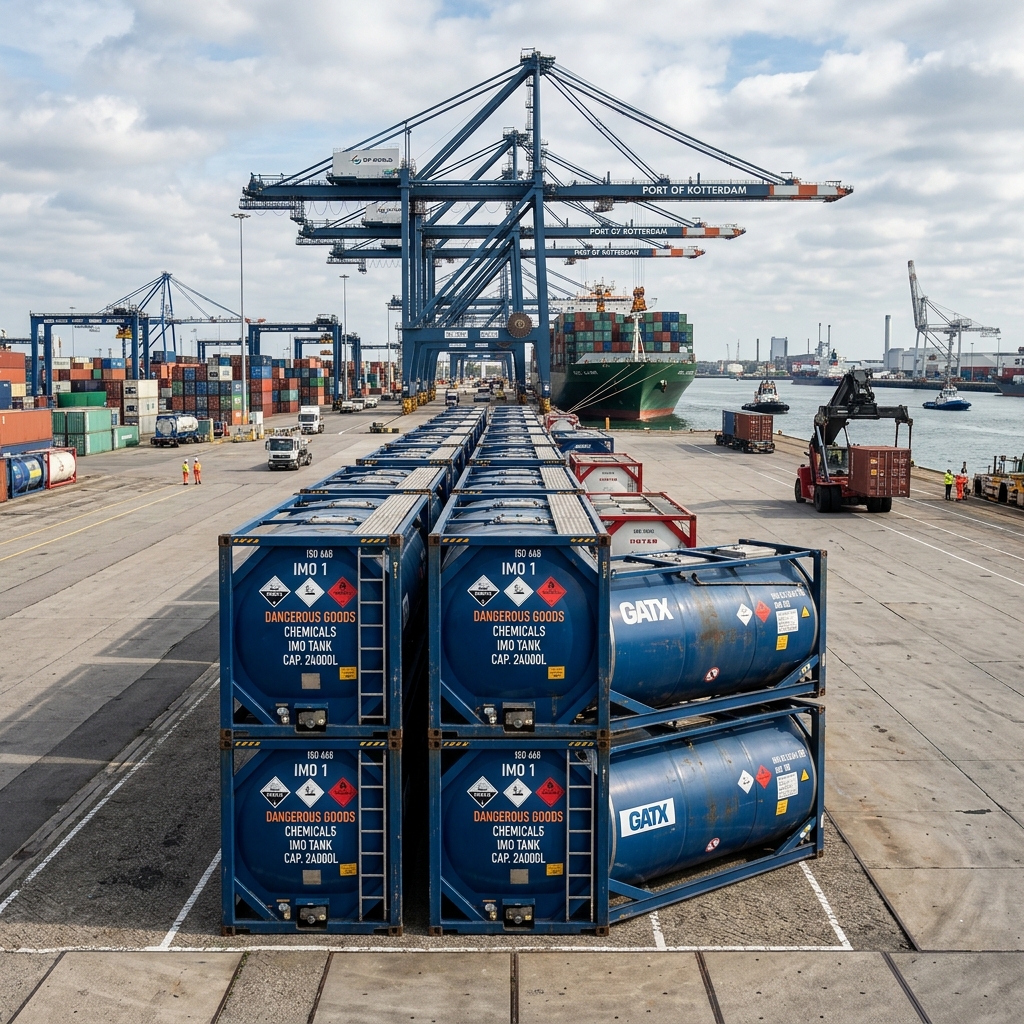
In addition to the core documents, dangerous goods shipments need a dangerous goods declaration confirming the correct IMDG hazard classification, along with documentation of compliant packaging and labeling. This documentation needs to be finalized and confirmed with the carrier before booking, since not every sailing accepts every hazard class.
The Complete Guide to Shipping Dangerous Goods from China to the UAE
ISO Tank Containers
Tank container shipments need tank certification confirming the tank meets applicable construction and safety standards, documentation of compatibility between the tank lining and the product being carried, and cleaning records from the tank's most recent use.
RoRo Shipments
Vehicles and self-propelled equipment need documentation confirming specification and, depending on the vehicle type and intended use, registration or roadworthiness details in addition to standard shipping documents.
Breakbulk and Project Cargo
Oversized or non-containerizable cargo typically requires a detailed packing and lifting plan submitted to the destination port ahead of arrival, along with route survey documentation for any inland transport of oversized loads. This documentation needs port authority coordination well before the vessel arrives, not after.
A Practical Pre-Shipment Checklist
Before booking is finalized: confirm HS code classification, confirm whether an import permit or product-specific certificate applies, and confirm dangerous goods classification if there's any doubt about the product. Before the vessel or aircraft departs: cross-check the commercial invoice, packing list, and bill of lading/air waybill line by line, and confirm the certificate of origin is issued and matches the shipment. For cargo-specific shipments: confirm dangerous goods declarations, tank certification, or lifting plans are finalized and submitted according to the destination port's timeline requirements.
Conclusion: Documentation Accuracy Is the Highest-Leverage Step
Of everything covered in the broader shipping process, documentation accuracy has the most direct, most controllable effect on whether a shipment clears Jebel Ali on schedule. The core document set, cross-checked for consistency, combined with UAE-specific and cargo-specific requirements confirmed early, closes off the majority of preventable customs delays.
Ready to move forward? [Request a cargo assessment](/contact or quote request page)