
The Complete Guide to Shipping Dangerous Goods from China to the UAE
Shipping dangerous goods from China to the UAE is not the same process as shipping ordinary cargo with a hazard label stuck on the side. It is a regulated chain of decisions, classification, packaging, documentation, carrier acceptance, and customs clearance, where a single wrong entry can stop a container at the port of loading or get it held at Jebel Ali until the paperwork is corrected. Chinese manufacturing exports a wide range of regulated cargo to the UAE and the wider GCC: lithium batteries, industrial chemicals, paints and coatings, aerosols, adhesives, and machinery containing hazardous components. Each of these falls under the International Maritime Dangerous Goods (IMDG) Code when it moves by sea, and under a parallel but distinct set of air transport rules when it moves by air.
[INTERNAL-LINK: shipping from China to the UAE → pillar guide to general China-UAE freight processes]
This guide walks through how dangerous goods are classified under the IMDG Code, what packing groups mean for your shipment, the documentation and packaging standards you need to meet, and how the process plays out specifically on the China-UAE trade lane, from origin export licensing in cities like Shenzhen and Ningbo through to customs clearance and manifestation at Jebel Ali. It is written for importers, exporters, and procurement managers who need a working understanding of the rules, not a legal textbook.
Key Takeaways
- Dangerous goods shipped by sea are governed by the IMDG Code, which organizes hazardous materials into nine UN hazard classes based on the type of danger they present, from explosives (Class 1) to miscellaneous hazards like lithium batteries and environmentally hazardous substances (Class 9).
- Most dangerous goods (outside Classes 1, 2, and 7) are also assigned a packing group, PG I, II, or III, that reflects the degree of danger and determines packaging strength requirements.
- Classification happens at origin and drives every downstream decision: which UN-certified packaging you need, how the shipment must be marked and labeled, which carriers will accept it, and what documentation customs authorities expect.
- The UAE, including the port and free zone authorities that oversee Jebel Ali, applies its own import approval and customs manifestation requirements on top of the IMDG Code, so compliance with the international code alone does not guarantee smooth clearance.
- Misclassification, incomplete documentation, and non-compliant packaging are the most common reasons dangerous goods shipments from China are delayed, rejected by carriers, or held at customs on arrival.
What Counts as Dangerous Goods in International Freight
A shipment counts as dangerous goods when the substance or article it contains has a recognized potential to harm people, property, or the environment during transport, and it has been assigned a UN number under the UN Model Regulations. This covers far more than the drums of industrial chemicals most people picture. Aerosol cans, lithium-ion batteries in consumer electronics, certain paints, adhesives, cleaning agents, and even some cosmetics and perfumes containing flammable solvents can fall under the classification.
The IMDG Code is the maritime-specific implementation of the UN Model Regulations, published and maintained by the International Maritime Organization (IMO) and adopted, in full or by reference, by the maritime authorities of most trading nations, including China and the UAE. If your cargo has a UN number, the IMDG Code governs how it must be packaged, marked, labeled, documented, and stowed aboard a vessel. Air transport uses a related but separately maintained rule set, the IATA Dangerous Goods Regulations, which is stricter in several respects because of the added risks of pressure and temperature changes in flight.
Before you can do anything else, an exporter or their forwarder needs to determine whether a product is regulated at all, and if it is, exactly which UN number and class it falls under. This first step, classification, is where most compliance problems either get caught early or slip through unnoticed.
How to Ship Dangerous Goods Internationally Step by Step
The 9 UN Hazard Classes Explained
The IMDG Code organizes all regulated substances into nine classes, based on the primary type of hazard they present rather than their chemical composition. Some classes are further divided into subdivisions that narrow the hazard down further. Understanding which class your cargo falls into is the foundation for every packaging, labeling, and stowage decision that follows.
Class 1: Explosives
Class 1 covers substances and articles that present a risk of explosion, mass detonation, or projection hazard, including fireworks, ammunition, and certain industrial charges. It is divided into six subdivisions (1.1 through 1.6) that reflect the severity and pattern of the hazard. Class 1 cargo faces the tightest carrier acceptance restrictions of any class and is rarely relevant to general commercial importers.
Class 2: Gases
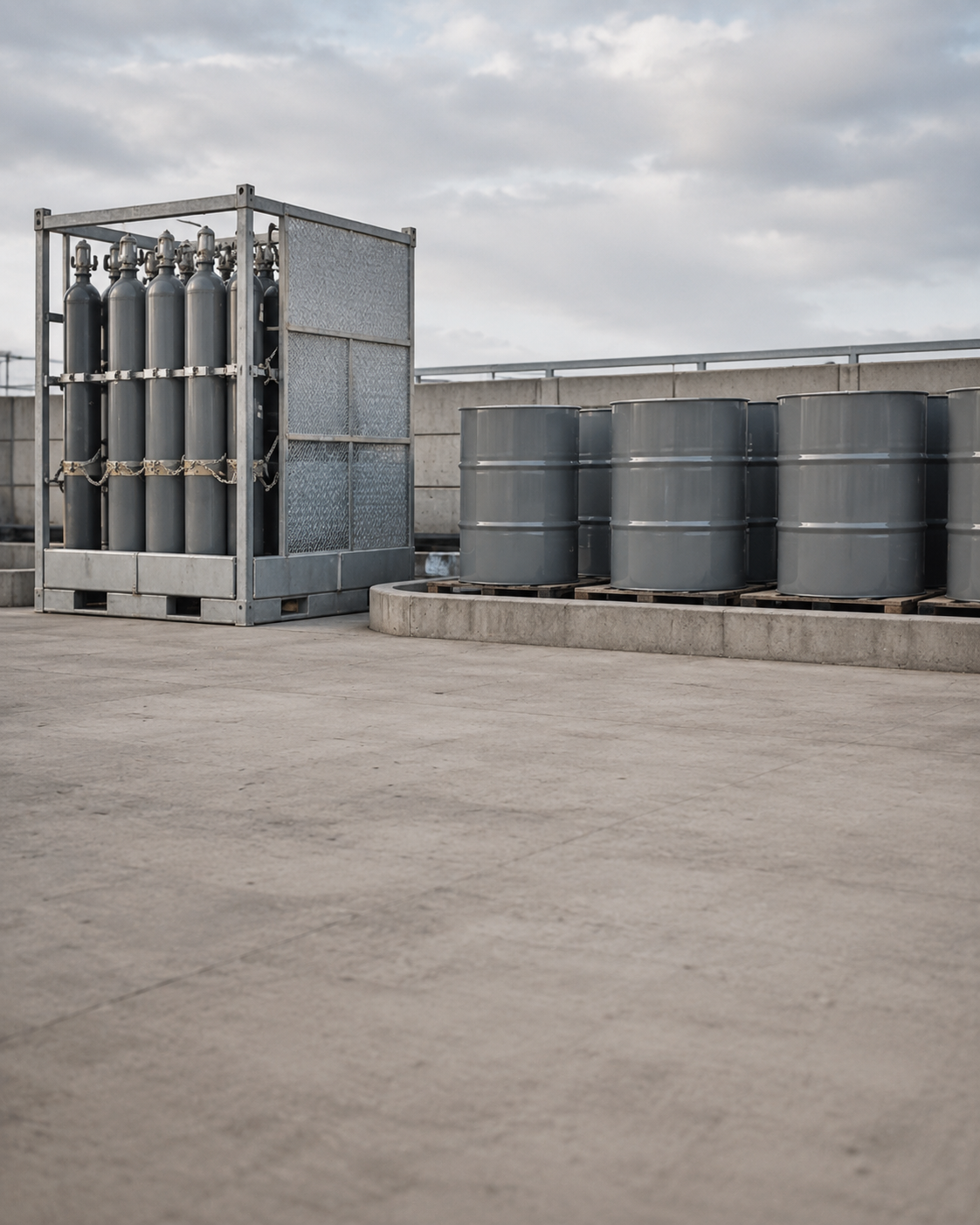
Class 2 covers compressed, liquefied, or dissolved gases, split into three divisions: 2.1 flammable gases (such as butane and propane), 2.2 non-flammable, non-toxic gases (such as compressed nitrogen or carbon dioxide), and 2.3 toxic gases. Gas cylinders require specific valve protection and pressure-testing certification in addition to standard IMDG marking.
Class 3: Flammable Liquids
Class 3 covers liquids with a flash point low enough to ignite readily, including many solvents, paints, adhesives, and fuels commonly exported from Chinese manufacturing hubs. This is one of the highest-volume classes on the China-UAE trade lane because it captures so many industrial and consumer chemical products.
Class 4: Flammable Solids
Class 4 is split into three divisions: 4.1 flammable solids that ignite easily through friction or contact with flame, 4.2 substances liable to spontaneous combustion, and 4.3 substances that emit flammable gases when they contact water. Certain metal powders and matches fall here.
Class 5: Oxidizing Substances and Organic Peroxides
Class 5 covers substances that, while not necessarily combustible themselves, can intensify a fire by releasing oxygen. Division 5.1 covers oxidizing substances such as certain fertilizers and bleaching agents; division 5.2 covers organic peroxides, which additionally require temperature-controlled transport in many cases.
Class 6: Toxic and Infectious Substances
Division 6.1 covers substances toxic enough to cause serious injury or death if inhaled, ingested, or absorbed through skin. Division 6.2 covers infectious substances, including certain biological and medical materials. Pesticides and some industrial chemicals are common Class 6.1 exports.
Class 7: Radioactive Material
Class 7 covers material that emits ionizing radiation above defined thresholds. It is subject to a separate, highly specialized set of packaging and transport approvals and is rarely encountered outside medical, industrial testing, and research shipments.
Class 8: Corrosives
Class 8 covers substances that can cause visible destruction of, or irreversible damage to, skin, or that are corrosive to other cargo or the vessel itself, including many acids, alkalis, and battery electrolytes. Corrosive liquids require packaging tested specifically for chemical compatibility.
Class 9: Miscellaneous Dangerous Goods
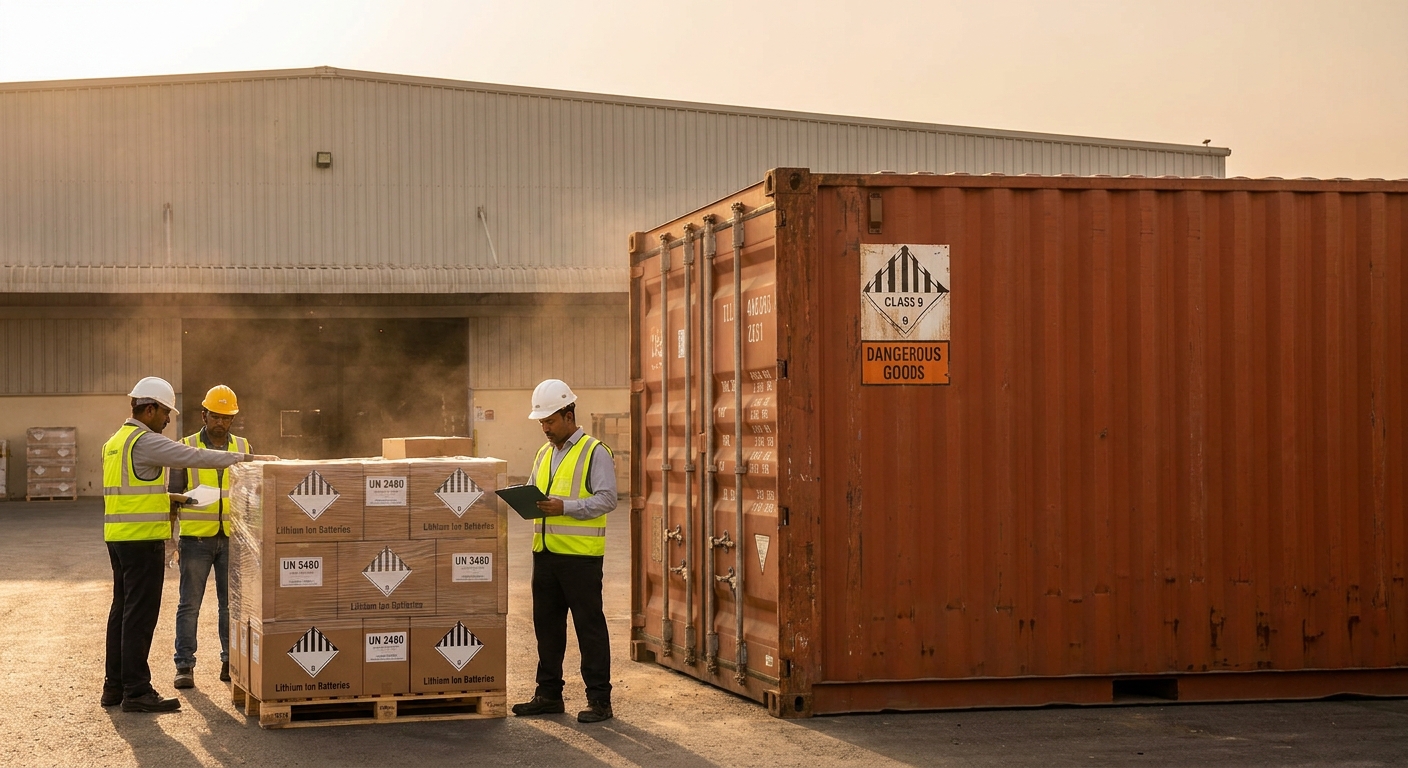
Class 9 is the catch-all class for hazards that do not fit the other eight categories but still present a recognized transport risk. This is where lithium-ion and lithium-metal batteries are classified, along with dry ice, magnetized materials, and substances hazardous to the marine environment. Because lithium batteries are shipped inside so many consumer electronics exported from China, Class 9 has become one of the most operationally significant classes for importers bringing electronics, e-bikes, power banks, and battery-powered equipment into the UAE.
Case Study: Safely Shipping Lithium Batteries from Shenzhen to Jebel Ali
Packing Groups and Why They Matter
Most substances in Classes 3 through 9 (with the exception of Class 7) are also assigned a packing group, which reflects the degree of danger the substance presents independent of its hazard class. Packing Group I indicates a high danger level, Packing Group II indicates a medium danger level, and Packing Group III indicates a low danger level. Two products in the same UN class can carry very different packing group ratings depending on factors like flash point, boiling point, or toxicity threshold.
The packing group assigned to a substance directly determines the strength and testing standard required of its packaging. A Packing Group I flammable liquid needs packaging tested to a stricter drop, stacking, and pressure standard than a Packing Group III version of a similar product, even though both carry a Class 3 placard. This is why classification has to happen before packaging is sourced, not after. Ordering standard steel drums or fiberboard cartons before confirming the packing group is one of the most common and costly sequencing mistakes exporters make.
IMDG Code Compliance Requirements Explained
Classification, Packaging, and Labeling: How the Pieces Fit Together
Classification, packaging, and labeling are three separate compliance steps that build on each other in sequence, and skipping ahead in the sequence is where most avoidable delays originate.
Classification comes first. A qualified classifier, either at the manufacturer, the exporter, or a dangerous goods specialist working with the forwarder, reviews the product's Safety Data Sheet (SDS) and physical properties to assign the correct UN number, class, and packing group. This is a technical judgment call, not a checkbox exercise, and it should be documented and retained, because customs and carrier compliance teams on both ends of the shipment can request it.
Packaging comes second. Once the UN number, class, and packing group are confirmed, the shipper selects UN-certified packaging rated for that specific combination. UN certification means the packaging design type, whether a drum, jerrycan, fiberboard box, or IBC, has passed drop, stacking, leak-proofness, and pressure testing appropriate to the packing group it is rated for. The certification mark stamped on approved packaging (typically a UN symbol followed by a code identifying the packaging type, material, and performance level) has to match the packing group of the goods inside it.
Marking and labeling come third. Every package needs the correct UN number, proper shipping name, and hazard class diamond visible on the outside, along with any subsidiary risk labels and orientation arrows the product requires. Labels have to be the correct size, color, and symbol for the class, not a generic "hazardous" sticker. Errors at this stage, wrong UN number on the label, missing subsidiary hazard markings, or labels that do not match what is declared on the paperwork, are a leading trigger for carrier rejection and port inspection holds.
How Dangerous Goods Move from China to the UAE: The Process Overview
A dangerous goods shipment from a Chinese factory to a UAE consignee follows a longer and more document-heavy path than general cargo, with checkpoints at both ends of the voyage.
At origin, the process starts with classification and SDS review, followed by sourcing UN-certified packaging and preparing the Dangerous Goods Declaration (DGD), which is the shipper's formal, signed statement of what the cargo is, how it is classified, and how it has been packaged. Chinese ports and carriers require this declaration, along with supporting export documentation, before they will accept a booking for hazardous cargo. Carrier acceptance is not automatic even after documentation is complete: shipping lines maintain their own restricted and prohibited cargo lists, and vessel operators can decline specific hazard classes or combinations depending on what else is loaded on that voyage.
In transit, dangerous goods containers are stowed according to segregation rules that keep incompatible hazard classes apart on the vessel, which is one of the reasons DG bookings need to be confirmed further in advance than standard cargo bookings.
On arrival in the UAE, the shipment moves through import approval and customs clearance, which for hazardous cargo typically involves the destination port or free zone authority reviewing the Dangerous Goods Declaration, the SDS, and the commercial documentation before releasing the container. Free zones and mainland UAE apply overlapping but distinct compliance layers, so a forwarder with in-house UAE customs clearance and manifestation capability at Jebel Ali can resolve documentation queries directly with the authority rather than routing them through a third party, which shortens the time a container sits waiting for release.
How to Ship Dangerous Goods Internationally Step by Step
Documentation You Need for a Dangerous Goods Shipment
Documentation is where classification decisions become legally binding paperwork, and it is the single area customs and carrier compliance teams scrutinize most closely.
The Dangerous Goods Declaration is the core document. It states the UN number, proper shipping name, hazard class and subsidiary risk, packing group, quantity, and packaging type for every regulated item in the shipment, and it is signed by the shipper certifying that the information is accurate and that the cargo has been packaged and labeled according to the applicable regulations. Alongside the DGD, exporters typically need a current Safety Data Sheet for each substance, a packing certificate confirming the UN packaging rating used, the commercial invoice and packing list, the bill of lading with the correct hazard class annotations, and, for certain chemical categories, an export license or permit from Chinese authorities.
On the UAE side, import clearance for dangerous goods generally requires the same DGD and SDS package presented to Chinese export authorities, plus any UAE-specific import permits the product category requires, and the customs declaration itself, which needs to correctly reference the IMDG classification so the shipment is manifested under the right cargo category rather than as general goods. A mismatch between what is declared on the manifest and what the DGD states is one of the fastest ways to trigger a physical inspection.
Dangerous Goods Documentation Checklist for Exporters
IMDG Code Compliance at UAE Ports
Complying with the IMDG Code internationally is necessary but not sufficient for a smooth arrival at a UAE port. The UAE layers its own regulatory requirements on top of the international framework, and Jebel Ali, as one of the region's largest transshipment and import hubs, applies specific hazardous cargo handling and berthing procedures that general cargo does not go through.
Dangerous goods containers destined for Jebel Ali typically need pre-arrival notification so the terminal can plan segregated yard storage and, where applicable, restricted handling windows. The port and the relevant municipal or federal authority review the cargo's classification against the manifest before granting import approval, and some hazard classes, particularly explosives, radioactive material, and certain toxic or oxidizing substances, require additional import permits obtained before the vessel arrives, not after. A forwarder that manages classification, documentation, and destination clearance in-house, rather than handing the destination leg to a separate customs agent, has more control over resolving these approvals without the container sitting in the yard accruing demurrage while paperwork moves between multiple parties.
Choosing Between Ocean Freight and Air Freight for Dangerous Goods
The choice between ocean and air freight for a dangerous goods shipment usually comes down to which hazard class the cargo falls under, how quickly it is needed, and how the cost of compliance packaging compares against freight cost.
Ocean freight, governed by the IMDG Code, generally allows more flexibility on packaging and permitted quantities than air freight does, and it remains the more common mode for bulk chemicals, drums, and ISO tank container shipments moving from Chinese ports to Jebel Ali. Air freight, governed by the IATA Dangerous Goods Regulations, applies tighter quantity limits and, for several hazard classes including certain lithium battery configurations, outright restrictions on what can be carried as cargo on a passenger or cargo aircraft. Air freight can still be the right choice when transit time outweighs the added packaging and documentation cost, particularly for smaller, higher-value regulated shipments like battery-powered electronics or specialty chemical samples.
Neither mode is categorically "safer" in the sense of accident risk; both operate under strict, well-established regulatory frameworks designed to prevent incidents. The practical difference for a shipper is compliance complexity, permitted cargo, and cost, not underlying safety.
Ocean Freight vs Air Freight for Dangerous Goods: Which Is Safer and Cheaper
What Dangerous Goods Shipping Costs: Surcharges to Expect
Dangerous goods shipments carry cost layers that general cargo does not. Carriers apply a hazmat surcharge on top of standard freight rates to cover the additional handling, segregated stowage, and administrative review their compliance teams perform on every DG booking. UN-certified packaging itself costs more than standard commercial packaging because of the testing and certification the manufacturer has to carry, and that cost scales with packing group, with Packing Group I packaging typically commanding the highest premium.
Additional cost can come from destination handling: segregated yard storage at the port, any required inspection fees, and the administrative cost of preparing and reviewing the Dangerous Goods Declaration and supporting permits. Shippers who plan for these costs upfront, rather than treating them as a rate quote surprise, are better positioned to price landed cost accurately and avoid budget disputes mid-shipment.
Dangerous Goods Shipping Costs: Surcharges and Packaging Expenses Explained
Common Mistakes That Delay or Reject Dangerous Goods Shipments
The mistakes that cause dangerous goods shipments to get held, rejected, or returned tend to cluster around a small number of recurring failure points rather than being random or unpredictable.
Misclassification is the most consequential mistake, because every downstream decision, packaging, labeling, documentation, carrier acceptance, inherits the error. A product classified under the wrong UN number or packing group can pass through packaging and documentation looking complete while still being fundamentally non-compliant. Incomplete or inconsistent documentation is a close second: a Dangerous Goods Declaration that does not match the commercial invoice, or a bill of lading missing the correct hazard class annotation, is enough to trigger a hold even when the physical packaging and product itself are fully compliant. Using standard commercial packaging instead of UN-certified packaging rated for the correct packing group is a third recurring failure, often driven by cost-cutting or a supplier substituting packaging without informing the shipper. Booking with a carrier without confirming acceptance for that specific hazard class in advance, and underestimating the lead time dangerous goods bookings require compared to general cargo, round out the most common operational mistakes.
5 Common Mistakes Shippers Make with Dangerous Goods Cargo
Working with a Dangerous Goods Specialist on the China-UAE Lane
Dangerous goods compliance is manageable, but it depends on getting classification right at the start and keeping documentation consistent through every handoff between the Chinese exporter, the ocean carrier, and UAE customs. A forwarder that handles classification support, UN-certified packaging sourcing, documentation preparation, and destination customs clearance and manifestation under one roof removes several of the handoff points where inconsistencies typically creep in. When origin-side classification and documentation review are paired with in-house UAE customs clearance, a container's paperwork does not have to pass through a separate clearing agent before it can be released, which is the step where many delays otherwise accumulate.
Regulatory Trends Shaping Dangerous Goods Shipping
The IMDG Code is updated on a recurring cycle by the IMO, with amendments periodically adjusting classification criteria, packaging standards, and documentation requirements as new products and materials enter international trade. Lithium battery regulations in particular have tightened over recent amendment cycles as battery-powered consumer goods have grown as a share of China's export volume, and shippers moving electronics, e-bikes, and battery packs should expect continued regulatory attention in this category. On the UAE side, port and customs authorities periodically update import approval and manifestation procedures for hazardous cargo categories, which makes working with a forwarder that tracks both the international code and local UAE requirements more valuable than relying on IMDG compliance alone.
Dangerous Goods Shipping Regulation Trends to Watch in 2026
In This Guide: Related Reading
This pillar guide is part of a broader dangerous goods content series. For deeper detail on any single step in the process, see:
- How to Ship Dangerous Goods Internationally Step by Step
- Dangerous Goods Shipping Costs: Surcharges and Packaging Expenses Explained
- 5 Common Mistakes Shippers Make with Dangerous Goods Cargo
- Ocean Freight vs Air Freight for Dangerous Goods: Which Is Safer and Cheaper
- IMDG Code Compliance Requirements Explained
- Dangerous Goods Documentation Checklist for Exporters
- Case Study: Safely Shipping Lithium Batteries from Shenzhen to Jebel Ali
- Dangerous Goods Shipping FAQ: Classification, Labeling, and Liability
- Dangerous Goods Shipping Regulation Trends to Watch in 2026
Frequently Asked Questions
What is the IMDG Code, and does it apply to every shipment?
The IMDG Code is the International Maritime Organization's framework for classifying, packaging, labeling, and stowing dangerous goods carried by sea. It applies to any shipment containing a substance or article assigned a UN number under the UN Model Regulations, regardless of shipment size, so a single pallet of regulated product inside an otherwise general cargo container still triggers the same classification and documentation requirements as a full container of hazardous material. It does not apply to air shipments, which fall under the separate IATA Dangerous Goods Regulations instead.
Dangerous Goods Shipping FAQ: Classification, Labeling, and Liability
Do lithium batteries count as dangerous goods?
Yes. Lithium-ion and lithium-metal batteries are classified under Class 9 of the IMDG Code, and specific rules apply depending on whether the batteries are shipped alone, packed with equipment, or installed inside equipment. Because battery-powered products make up a significant share of China's consumer electronics exports, lithium battery compliance has become one of the more operationally important areas of dangerous goods shipping on the China-UAE lane.
How is a shipment's packing group determined?
Packing group is determined by the physical and chemical properties of the substance itself, such as flash point, boiling point, or toxicity threshold, measured against the criteria set out in the IMDG Code for each hazard class. It is assigned during classification, based on the product's Safety Data Sheet and, where necessary, laboratory testing, and it directly determines which UN-certified packaging rating the shipment requires.
Who is liable if dangerous goods are misclassified or mislabeled?
Liability for classification accuracy rests primarily with the shipper, who signs the Dangerous Goods Declaration certifying that the cargo has been correctly classified, packaged, and labeled. Carriers and forwarders can also carry liability exposure if they knowingly accept or fail to catch a misdeclared shipment, which is why reputable forwarders review classification documentation before booking rather than passing it through unchecked. Contracts and bills of lading typically include specific dangerous goods liability clauses, and shippers should review these before booking a regulated shipment.
Can I use standard commercial packaging for dangerous goods if the quantity is small?
Generally, no. Most hazard classes require UN-certified packaging regardless of shipment size, though the IMDG Code does provide limited quantity and excepted quantity provisions that allow reduced packaging and marking requirements for small amounts of certain lower-risk substances. Whether a shipment qualifies for these provisions depends on the specific substance, its packing group, and the quantity per package, so it needs to be confirmed during classification rather than assumed.
Getting Your Next Dangerous Goods Shipment Right
Shipping dangerous goods from China to the UAE comes down to getting three things right in sequence: accurate classification at origin, packaging and documentation that match that classification exactly, and a clearance process at Jebel Ali that does not introduce new inconsistencies between what was declared and what customs receives. Most delays and rejections trace back to a breakdown in one of those three steps, not to the underlying regulations being unreasonable or unclear.
If you are planning a dangerous goods shipment from China and want a classification and compliance review before you book, request a cargo assessment and Farway's dangerous goods team will walk through your product's classification, packaging requirements, and the documentation needed for a clean clearance at Jebel Ali.
[INTERNAL-LINK: China to UAE Freight Rate Guide → pillar guide on FCL, LCL, and charter pricing for general cargo context]