
China to UAE Import Regulations and Compliance Explained
Importing into the UAE from China involves more than paying duty and filling out a customs declaration. Product classification, permits, and category-specific certificates all shape whether a shipment clears smoothly or gets held for review. This guide answers the regulatory questions importers ask most often, organized by the compliance areas that actually affect clearance outcomes.
For the full shipping process these regulations sit within, see the complete guide to shipping from China to the UAE.
Key Takeaways
- HS code classification determines duty rate and whether additional regulatory approvals apply, making it a compliance decision, not just a customs formality.
- An import permit, trade license reference, and product-specific certificates (health, safety, conformity) may be required depending on the goods and importing entity.
- Dangerous goods require classification and declaration under the IMDG Code in addition to standard import requirements.
- Regulations and duty schedules can change; importers should confirm current requirements with their forwarder or a customs advisor rather than relying on a previous shipment's requirements.
- Getting classification and permits right before the shipment leaves China prevents most of the compliance-related delays that show up at Jebel Ali.
What Determines a Product's HS Code Classification?
The Harmonized System (HS) code is an internationally standardized numerical classification for traded products, and it's the single most consequential classification decision in the import process. It determines the applicable duty rate, and it can also determine whether a product needs additional approvals, permits, or certificates before it can clear UAE customs.
Classification should be based on the product's actual composition, function, and material, not on what classification would produce the lowest duty rate. Misclassification, even unintentional, is a compliance risk that can result in delayed clearance, back duty assessment, or penalties. For products that don't fit clearly into a single category, or that could plausibly be classified more than one way, it's worth getting the classification confirmed by your forwarder or a customs advisor before the shipment is booked, not after it arrives.
Do I Need an Import Permit or Trade License Reference?
Depending on the product category and the importing entity's registration status, UAE customs may require an import permit or a reference to the importer's valid UAE trade license as part of the clearance documentation. This applies more consistently to regulated product categories, food, pharmaceuticals, electronics with radio-frequency components, and certain chemicals, than to general unregulated merchandise.
Confirm your entity's registration status and any category-specific permit requirements before the shipment departs China, since obtaining a permit after cargo has already arrived adds clearance delay that's avoidable with earlier planning.
The Essential Documentation Checklist for China–UAE Shipments
What Product-Specific Certificates Might Be Required?
Certain product categories require certificates beyond the standard shipping document set: health certificates for food and agricultural products, safety or conformity certificates for electronics and certain consumer goods, and quality or compliance marks for products subject to UAE or GCC technical regulations. These requirements vary by product category and can change, so a certificate that wasn't required on a previous shipment of a similar product isn't a reliable guide for a current one.
Building certificate requirements into your sourcing and documentation timeline, rather than treating them as a customs-side surprise, is the more reliable approach. Your forwarder or a customs advisor familiar with the specific product category is the right source for current requirements.
How Does Dangerous Goods Compliance Work?
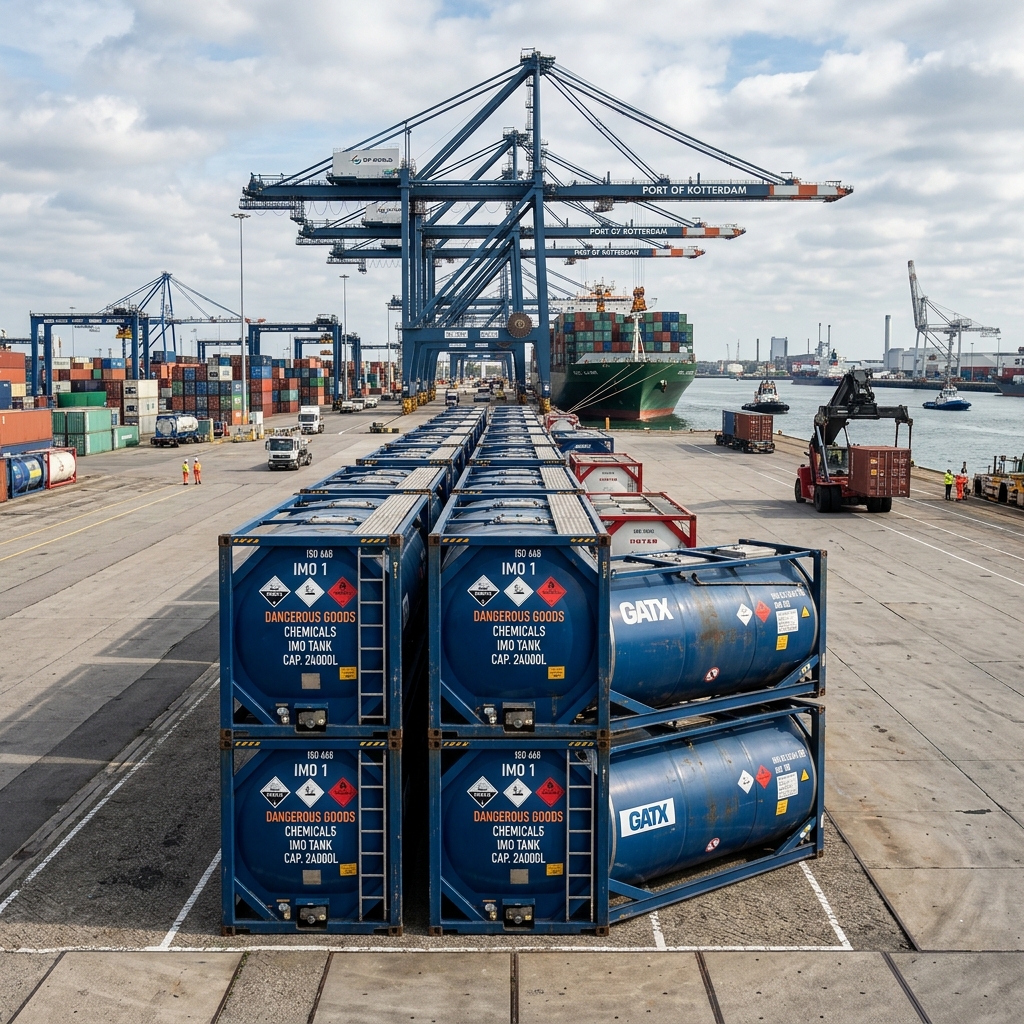
Chemicals, batteries, aerosols, and other hazardous materials fall under a separate compliance track governed by the IMDG Code for ocean freight. This requires accurate classification into the correct hazard class, compliant packaging and labeling, and a dangerous goods declaration submitted alongside standard shipping documents.
Carrier acceptance for dangerous goods isn't automatic; vessels have limits on the type and volume of hazardous cargo they'll carry on a given voyage, and stowage requirements affect which sailings are viable. This compliance track needs to be addressed at the sourcing and booking stage, not discovered during documentation preparation.
The Complete Guide to Shipping Dangerous Goods from China to the UAE
What About ISO Tank Container and Bulk Liquid Compliance?
Bulk liquids, chemicals, food-grade products, and gases moving in ISO tank containers carry their own compliance requirements: tank certification confirming the tank meets applicable safety and construction standards, compatibility documentation between the tank lining and the product carried, and cleaning records between uses. These records need to be available for customs review and, in food-grade cases, may connect to additional food safety compliance requirements.
How Do Regulations Differ for RoRo and Project Cargo?
Vehicles and self-propelled equipment moving by RoRo generally follow standard import compliance requirements with some additional documentation around vehicle registration, specification, and, in some cases, roadworthiness or emissions compliance depending on the vehicle type and intended use in the UAE. Breakbulk and project cargo, oversized machinery, generators, structural components, typically requires additional coordination with port authorities around lifting plans and inland transport permits for oversized loads, which function alongside standard import compliance rather than replacing it.
What Happens If a Compliance Requirement Is Missed?
A missing permit, certificate, or declaration typically results in the shipment being flagged for manual review or held pending the missing document, rather than automatic rejection, for most correctable compliance gaps. This adds time and, depending on how long the cargo sits, can trigger demurrage or detention charges. Serious or repeated compliance failures, particularly around dangerous goods misdeclaration, carry more significant consequences, including penalties.
The practical takeaway is that compliance gaps are usually a timeline problem, not necessarily a shipment-ending one, but the fix is almost always faster and cheaper when addressed before the shipment leaves China rather than after it arrives at Jebel Ali.
For quick answers to other common compliance and process questions, see the China to UAE Shipping FAQ: Answers to the Questions Importers Ask Most.
Conclusion: Build Compliance Into the Timeline, Not the Aftermath
UAE import compliance isn't a single checkbox; it's a set of requirements that vary by product category and cargo type, from HS classification and permits through to dangerous goods declarations and tank certification. Confirming these requirements at the sourcing and booking stage, rather than discovering them during documentation preparation or after arrival, is what keeps a shipment moving through Jebel Ali on schedule.
Ready to move forward? [Request a cargo assessment](/contact or quote request page)