The Complete Guide to ISO Tank Containers
Moving bulk liquid or chemical cargo between China and the UAE comes down to one core decision: what do you put the product in. Drums are familiar but slow to load and prone to leakage claims. Flexitanks are cheap but limited to non-hazardous, non-reactive cargo. ISO tank containers sit in between: a reusable, standardized steel vessel built to move everything from edible oils to corrosive chemicals safely, repeatedly, and with far less handling risk than packaged alternatives.
This guide covers what an ISO tank container actually is, how the T1 to T22 classification system works, typical capacity and dimension ranges, the construction standards that govern how tanks are built and inspected, and how tanks stack up operationally against drums, flexitanks, and flexibags. It's written for importers, exporters, and procurement teams evaluating bulk liquid transport options on the China-UAE and wider GCC trade lane.
[INTERNAL-LINK: dangerous goods shipping from China to the UAE → pillar page on Farway's IMO/DG freight forwarding services]
Key Takeaways
- An ISO tank container is a cylindrical pressure vessel, usually stainless steel, mounted inside a standard steel frame built to ISO 1496-3, so it can be handled by the same cranes, chassis, and vessel cell guides as a regular shipping container.
- Tank types are classified T1 through T22 under the UN Model Regulations (and mirrored in the IMDG Code, ADR, and RID), with a separate T50 classification for liquefied gases; the code assigned to a substance depends on its UN number and packing group, not the shipper's preference.
- Standard chemical tank containers typically hold somewhere in the range of roughly 17,500 to 26,000 liters, fitted inside a 20-foot ISO frame footprint.
- Compared with drums, flexitanks, and flexibags, ISO tanks generally offer lower per-shipment handling risk and full reusability, but they suit a narrower range of cargo volumes and require access to tank cleaning and depot infrastructure at both ends of the move.
- Choosing the right tank type, cleaning regime, and booking lead time matters more on the China-UAE lane than on shorter regional routes, because transit times are longer and Jebel Ali's customs and manifestation process has its own documentation requirements.
What Is an ISO Tank Container?
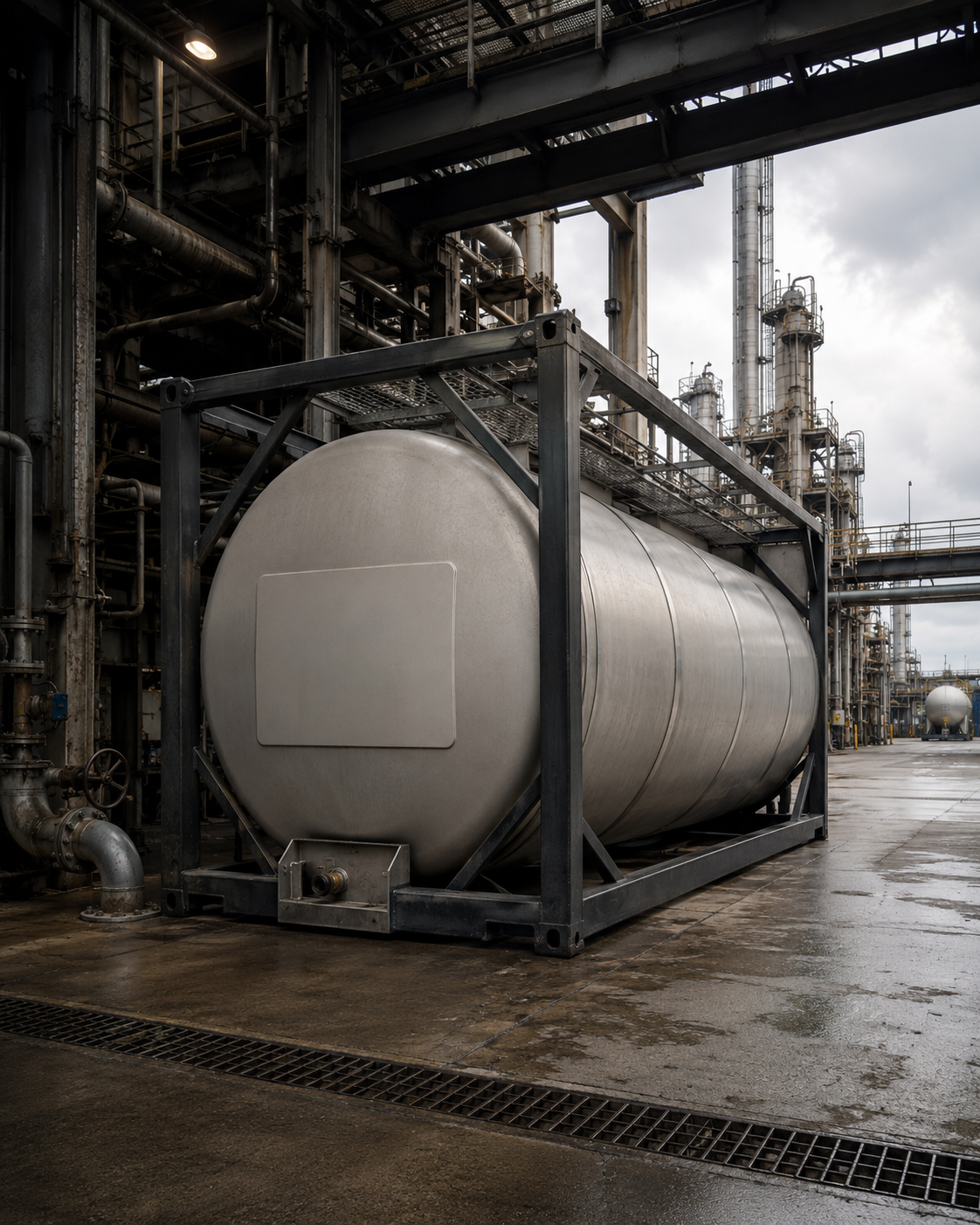
An ISO tank container is a cylindrical vessel, typically constructed from stainless steel, mounted inside a rectangular steel frame that matches the external dimensions of a standard shipping container. The frame, not the tank shell, is what makes it "ISO": it's built to the same corner-casting and structural standards as a dry van or reefer box, so port cranes, container chassis, rail wagons, and vessel cell guides can all handle it without special equipment.
Inside that frame sits the actual pressure vessel, an insulated or uninsulated cylinder designed to hold liquid, gas, or powder cargo in bulk rather than in individual packages. A single tank container typically replaces dozens of drums or an entire IBC (intermediate bulk container) pallet run, which is the main reason chemical shippers move to tanks once volumes justify it.
Core Components and Construction
Every ISO tank container shares a common set of parts regardless of what cargo it's rated to carry. The shell is the pressure vessel itself, usually stainless steel (grades such as 316L are common for corrosive or food-grade cargo). The frame is the external steel structure with ISO corner castings at each corner, allowing standard twist-lock handling. A manway on top allows access for loading, cleaning, and inspection. Valves, typically a top discharge and/or bottom discharge valve, control loading and unloading. Many tanks also carry safety relief devices (pressure relief valves or frangible discs) that vent excess internal pressure before it can rupture the shell, and some tanks include a heating system (steam coils or electric heating pads) for cargo that solidifies or thickens at ambient temperature.
How ISO Tanks Differ from Standard Shipping Containers
A dry container is an empty steel box; anything inside it needs its own packaging. An ISO tank is the packaging. The cargo is loaded directly into the pressure vessel rather than into drums or bags that are then loaded into a box. That distinction drives most of the operational differences covered later in this guide: tanks need specialized cleaning between cargoes, they're subject to periodic pressure testing rather than a simple structural inspection, and they can only be used for liquids, gases, or free-flowing powders, not general or palletized cargo.
ISO Tank Container Types and Classifications (T1-T22)
Tank containers used for dangerous or hazardous liquid cargo are assigned a "T-code" under the UN Recommendations on the Transport of Dangerous Goods (commonly called the Orange Book). The same classification framework is carried into the IMDG Code for sea transport and into ADR and RID for European road and rail transport. The T-code, T1 through T22, defines the minimum shell test pressure, minimum shell thickness (or an engineering equivalent), and whether bottom-discharge outlets are permitted for a given tank.
Crucially, the shipper doesn't choose a T-code by preference. The substance being shipped has a UN number and packing group, and the Dangerous Goods List in the regulations specifies which portable tank instruction, and therefore which minimum T-code, applies to it. A tank built to a higher-numbered, more demanding specification can generally also carry cargo that only requires a lower spec, which is why many operators standardize their fleets on a mid-to-high spec tank to maximize the range of cargo one tank can carry.
Non-Hazardous and General Chemical Tanks
For non-hazardous bulk liquids, food-grade products, and many industrial chemicals that don't fall under strict UN dangerous goods classification, a standard general-purpose chemical tank is normally sufficient. These are frequently built to a T11-equivalent specification or higher as a matter of operator practice, even when the cargo itself doesn't legally require it, because it keeps the tank flexible enough to also carry mildly hazardous goods without needing a separate certification.
Hazardous and Dangerous Goods Tanks
As the T-code number increases, the tank is generally built for progressively more demanding requirements: higher minimum test pressure (ranging broadly from around 1.5 bar at the lower end up to 10 bar or more at the higher end), thicker shell walls or equivalent structural strength, and in many cases a prohibition on bottom-discharge outlets so that a valve failure can't release cargo directly to the ground. Tanks toward the top of the T1-T22 range are typically reserved for corrosive (Class 8), toxic (Class 6.1), and certain reactive substances where a containment failure would carry serious safety consequences.
Gas Tanks (T50) and Other Specialized Types
Liquefied gases under Class 2 use a separate classification, T50, which sits outside the T1-T22 numbering and is built to a substantially higher test pressure standard, generally cited in the broad range of roughly 20 to 31 bar depending on the specific gas, along with additional safety fittings such as multiple independent pressure relief valves. Beyond T50, the market also includes specialized swap-body tanks for shorter regional runs, insulated and heated tanks for cargo like bitumen or molasses that solidify at ambient temperature, and food-grade tanks with dedicated cleaning and certification protocols to prevent cross-contamination with industrial cargo.
How ISO Tank Containers Work: A Step-by-Step Overview
Typical Capacity and Dimension Ranges
Most tank containers used in international chemical and bulk liquid trade are built inside a standard 20-foot ISO frame, matching the external footprint of a 20-foot dry container (roughly 6.06 meters long, 2.44 meters wide, 2.59 meters high) so they slot into existing port, vessel, and inland transport infrastructure without modification. Within that frame, shell capacity commonly falls somewhere in the range of roughly 17,500 to 26,000 liters, with tanks toward the 24,000 to 26,000 liter mark being a common choice for general chemical liquids because they make efficient use of available payload under standard road weight limits.
Actual usable capacity is always lower than the tank's stated shell volume. Tanks are loaded to a maximum fill percentage, not filled completely, to leave room for thermal expansion (outage space) during transit. Denser cargoes reach their road or rail weight limit before the tank is physically full, so the practical liters-per-container figure varies by product density as much as by tank size.
Gas tanks (T50) and some specialized insulated or heated tanks tend to have somewhat lower liquid capacity than a standard chemical tank of the same external frame size, because thicker shell walls and additional internal fittings take up more of the available volume. Buyers comparing quotes across tank types should confirm actual usable capacity for their specific product rather than assuming a flat 24,000-liter figure applies across the board.
ISO Tank Container Construction Standards
Tank containers aren't built to a single arbitrary specification. The frame is constructed and tested to ISO 1496-3, the international standard covering tank container structural design, so that it can be safely stacked, lifted, and secured using the same equipment as any other ISO container. The pressure vessel inside is engineered and tested against the applicable portable tank instruction for its T-code, and tanks used for dangerous goods carry periodic inspection requirements, commonly a visual/leak-tightness check on a shorter cycle and a full hydraulic pressure test on a longer cycle, set out in the IMDG Code, ADR, and RID.
Shell Material and Cargo Compatibility
Stainless steel, most commonly grades in the 304 and 316L family, is the standard shell material for chemical and food-grade tank containers because it resists corrosion across a wide range of acids, solvents, and food products without the shell itself contaminating the cargo. Mild steel tanks with internal linings or coatings exist for specific applications but are less common in general chemical service. Material compatibility between the shell, gaskets, and valve seals is one of the first things to confirm before booking a tank, since the wrong gasket material can fail on contact with certain solvents or acids well before the shell itself would be affected.
Insulation, Heating, and Temperature Control
Many tank containers include an outer insulation jacket, and some add steam coils or electric heating pads beneath the insulation for cargo that needs to stay above a minimum temperature to remain pourable, such as certain oils, resins, and bitumen products. Insulated and heated tanks cost more to build and operate than a bare tank, so operators generally reserve them for cargo that specifically requires temperature control rather than fitting them across an entire fleet.
Periodic Testing and Certification
Because a tank container is a pressure vessel, not just a steel box, it's subject to periodic testing that a dry container never sees. Depending on the cargo classification, this typically includes routine visual and leak-tightness inspection on a shorter interval, and a full internal/external structural and hydraulic pressure test on a longer interval, generally every two and a half to five years for dangerous goods service under the IMDG Code and ADR framework. A tank that's out of test date can't legally be loaded with regulated cargo until it's re-certified, which is one of several booking and documentation checks covered in the tank container checklist below.
ISO Tank Container Safety Regulations and Certification Requirements
How ISO Tank Containers Work in Practice
The operational flow of a tank container shipment follows a consistent pattern regardless of cargo type: the tank is cleaned and inspected, positioned at the loading facility, filled through the top manway or a dedicated loading line, sealed and secured, moved by road or rail to port, loaded aboard the vessel, discharged at the destination port, moved inland, and emptied through the bottom or top discharge valve before being cleaned again for its next cargo. Each of those steps has its own documentation, from the pre-trip inspection certificate to the cleaning certificate the next shipper will require before loading.
Understanding this sequence in detail matters because most of the delays and cost overruns that occur with tank container shipments happen at the handoff points, not in transit. A cleaning certificate that doesn't match the next cargo's requirements, a tank that arrives at the loading facility out of test date, or a discharge valve that doesn't match the receiving facility's connection standard can each stall a shipment by days.
How ISO Tank Containers Work: A Step-by-Step Overview
ISO Tank Containers vs Drums, Flexitanks, and Flexibags
Choosing between an ISO tank and a packaged or bag-in-box alternative comes down to cargo compatibility, shipment volume, and how much handling risk the business is willing to accept.
Drums
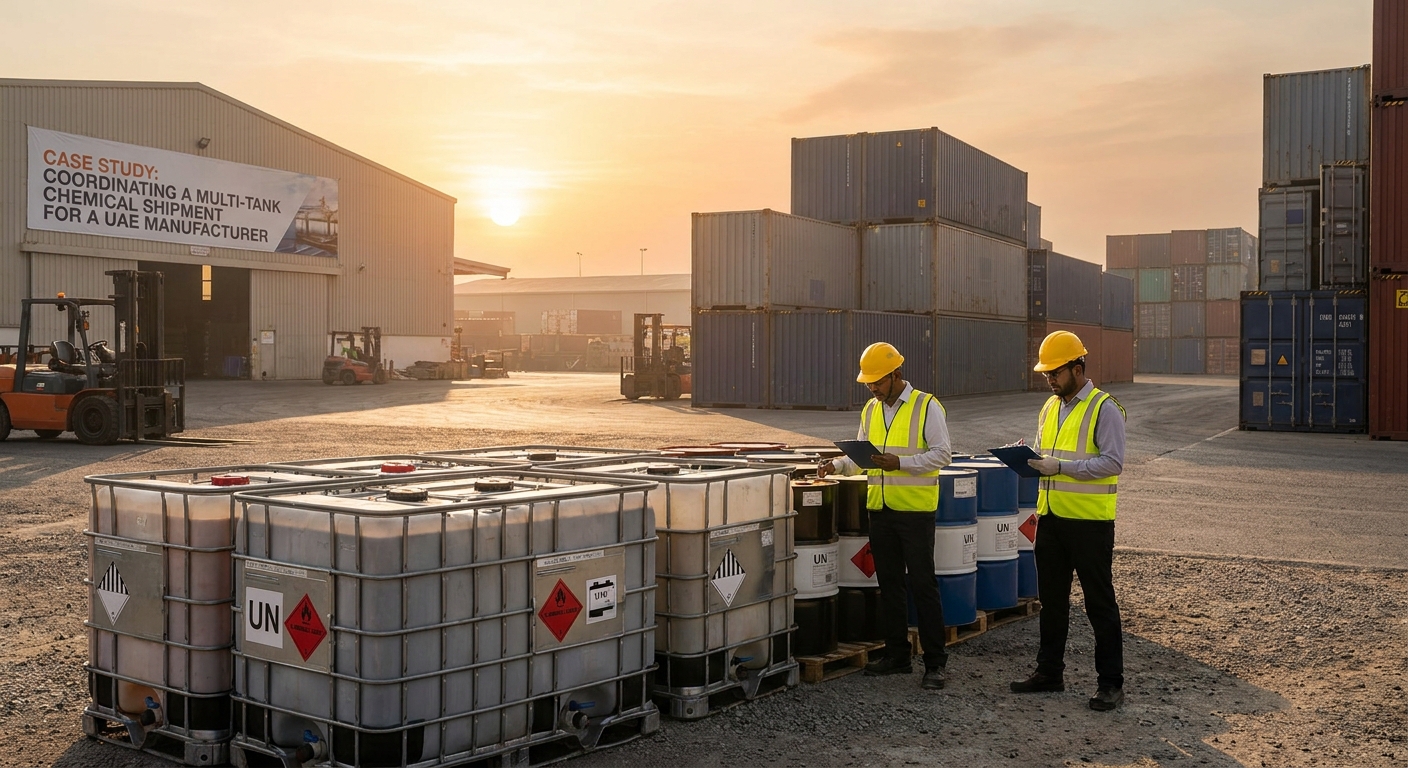
Steel or plastic drums remain the default for smaller volumes, mixed product runs, or cargo that needs to be split across multiple consignees. They're cheap to source, universally accepted, and don't require any specialized cleaning infrastructure at destination. The tradeoff is handling intensity: a single tank container's worth of liquid can mean well over a hundred individual drums, each one requiring its own handling, palletizing, and inspection, and each one representing an independent point of potential leakage or damage. Drum shipments also carry proportionally more empty packaging weight and volume relative to the actual product being shipped.
Flexitanks and Flexibags
A flexitank (sometimes called a flexibag) is a large flexible bladder, typically made of multi-layer polyethylene, fitted inside a standard 20-foot dry container to carry non-hazardous bulk liquids like edible oils, juice concentrates, or non-reactive industrial liquids. They're single-use, disposed of after one shipment, and considerably cheaper per shipment than an ISO tank because there's no reusable pressure vessel or cleaning cycle involved. The limitation is cargo scope: flexitanks aren't approved for dangerous goods, most chemicals, or cargo requiring temperature control, and they carry a higher risk of in-transit rupture than a rigid steel shell, particularly if the container isn't loaded and secured correctly.
ISO Tanks vs Flexitanks: Which Is Right for Your Liquid Cargo
Where ISO Tanks Win Operationally
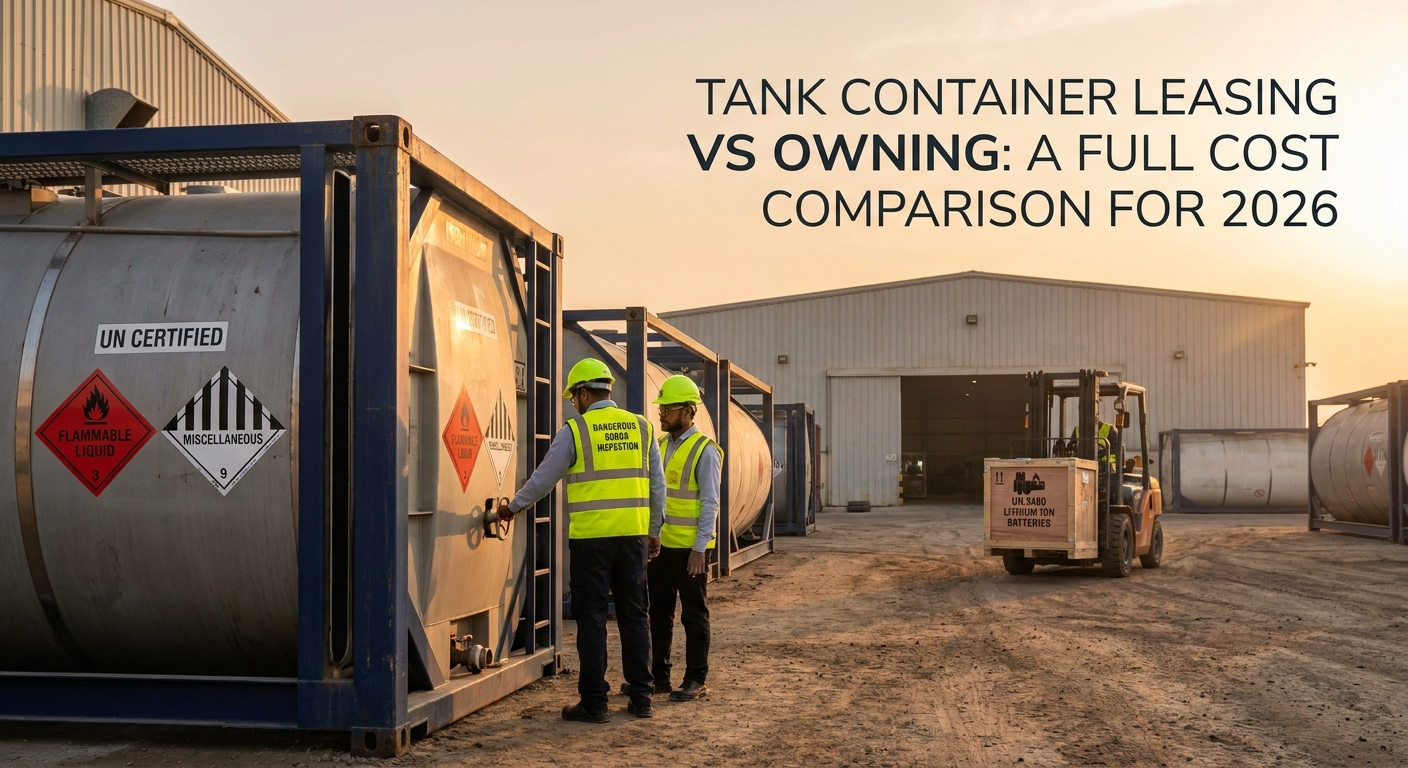
ISO tanks earn their higher per-shipment cost through reusability, cargo scope, and reduced handling risk. A single certified tank can be used, cleaned, and reused hundreds of times across its service life, and it can carry cargo, hazardous chemicals, food-grade liquids, temperature-sensitive products, that neither drums nor flexitanks are approved to handle at scale. For high-volume, recurring shipments of the same or compatible product, the per-liter economics often favor tanks once cleaning and depot costs are amortized across repeated use, though the full cost comparison depends heavily on lane, volume, and cargo type.
ISO Tank Container Shipping Costs vs Drums: A Full Economic Breakdown
When to Choose ISO Tank Containers for China-UAE Trade
The China-UAE lane has a few characteristics that make the tank-versus-alternative decision slightly different from a shorter regional route. Transit times are longer, which increases the exposure window for any packaging failure, and Jebel Ali handles a high volume of chemical and industrial liquid imports, which means the port's terminal operators, cleaning depots, and customs desks are well set up to handle tank container traffic specifically. For dangerous goods shipments in particular, using a properly classified tank rather than packaged alternatives simplifies both the export documentation on the China side and the manifestation and clearance process on arrival.
[INTERNAL-LINK: in-house UAE customs clearance and manifestation services at Jebel Ali → service page on Farway's customs and clearance operations]
Volume is the other deciding factor. A shipper moving a full tank load's worth of the same or compatible product on a recurring basis will generally get more value from tank containers than from repeated drum or flexitank shipments, simply because the fixed costs of tank cleaning and positioning are spread across a larger, more consistent cargo volume. Buyers moving smaller or highly mixed-product volumes may find drums or flexitanks more practical until their volumes justify a switch, a decision covered in more depth in the case study below.
Safety, Regulatory Compliance, and Certification
Tank containers used for dangerous goods are governed by an overlapping set of regulations depending on the mode and jurisdiction involved: the IMDG Code for sea transport, ADR for European road transport, RID for rail, and the UN Model Regulations that underpin all three. Compliance isn't optional or self-certified; it depends on the tank carrying current, valid inspection and test certificates that match the cargo being loaded, along with correct placarding, UN numbers, and packing group markings on the exterior of the tank.
Getting this wrong doesn't just create a safety risk, it creates a documentation risk that can stop a shipment at export or import customs. A tank that's technically capable of safely carrying a cargo but lacks the matching paperwork will typically be held until the discrepancy is resolved, which is one of the most common and most avoidable causes of delay on regulated cargo moving through Jebel Ali.
ISO Tank Container Safety Regulations and Certification Requirements
Common Mistakes to Avoid When Shipping in ISO Tank Containers
Most tank container problems trace back to a small number of recurring issues: booking a tank type that doesn't match the cargo's actual UN classification, failing to confirm the tank's cleaning history is compatible with the next cargo (residue from a prior chemical can contaminate an incompatible product even after cleaning), missing the tank's test certificate expiry date before it's due for loading, underestimating the lead time needed to position an empty tank at the loading facility, and mismatched valve or fitting standards between the tank and the receiving facility's discharge equipment. Each of these is preventable with the right pre-booking checks, which is why they're worth reviewing in detail before committing to a tank container program.
5 Mistakes Companies Make When Shipping in ISO Tank Containers
Tank Container Booking and Documentation Checklist
Booking a tank container involves more upfront verification than booking a standard dry container. At minimum, shippers should confirm the cargo's UN number and packing group and match it against the tank's certified T-code, verify the tank's current test and inspection certificate dates cover the full transit and any anticipated delay, confirm the tank's cleaning certificate and prior cargo history are compatible with the new product, check that valve and fitting types match the loading and discharge facilities at both ends, and confirm lead time for positioning an empty tank, which is typically longer than securing a standard container given tank fleets are smaller and more specialized than general dry container fleets.
Tank Container Booking Checklist for Bulk Liquid Shipments
Case Study Snapshot: Moving from Drums to ISO Tanks
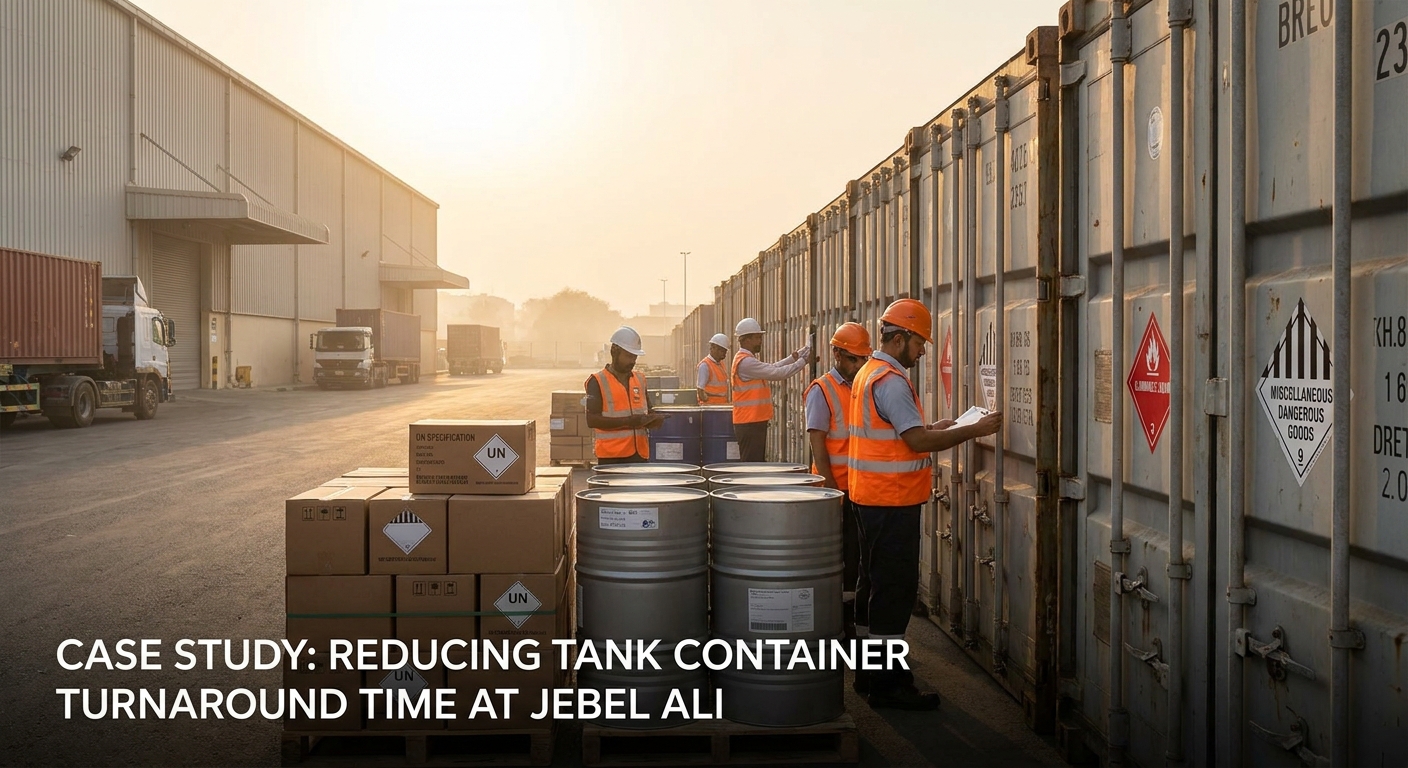
Chemical importers that start out shipping in drums typically make the switch to ISO tanks once their volumes reach a level where the handling and packaging overhead of drums becomes the dominant cost and risk factor, rather than the product itself. The transition isn't just a packaging change: it touches procurement contracts (tank rental or ownership), warehouse receiving procedures (tank offloading equipment isn't the same as a drum forklift), and customs documentation (tank shipments are declared and manifested differently than palletized drum cargo). A detailed walk-through of one such transition, including the planning steps and the operational adjustments involved, is covered in the linked case study.
Case Study: Switching a Chemical Importer from Drums to ISO Tanks
In This Guide: Related Reading
This pillar guide is part of a wider collection of tank container resources. Use the links below to go deeper on any specific stage of the process:
- How ISO Tank Containers Work: A Step-by-Step Overview – the full loading-to-discharge operational sequence
- ISO Tank Container Shipping Costs vs Drums: A Full Economic Breakdown – a line-by-line cost comparison
- 5 Mistakes Companies Make When Shipping in ISO Tank Containers – the most common and costly booking errors
- ISO Tanks vs Flexitanks: Which Is Right for Your Liquid Cargo – choosing between rigid tanks and flexible bladders
- ISO Tank Container Safety Regulations and Certification Requirements – the regulatory framework in detail
- Tank Container Booking Checklist for Bulk Liquid Shipments – a pre-booking verification list
- Case Study: Switching a Chemical Importer from Drums to ISO Tanks – a real transition, step by step
- ISO Tank Container FAQ: Capacity, Cleaning, and Reuse – quick answers to specific operational questions
- ISO Tank Container Market Trends for 2026 – where tank container capacity and demand are heading
Frequently Asked Questions
What's the difference between a T11 and a T14 tank container?
Both are UN portable tank classifications within the T1-T22 system, but they're built to different minimum specifications. Generally speaking, higher-numbered T-codes correspond to more demanding requirements, such as a higher minimum shell test pressure or restrictions on bottom-discharge outlets, intended for cargo with greater hazard potential. The specific substance being shipped, identified by its UN number and packing group, determines the minimum T-code required; a tank built to a higher spec can typically also carry cargo that only needs a lower one. For the exact minimum requirements tied to each code, refer to the current UN Model Regulations or IMDG Code Chapter 4.2 table, since these figures are updated periodically. ISO Tank Container FAQ: Capacity, Cleaning, and Reuse
Can an ISO tank container carry food-grade and chemical cargo interchangeably?
Not without a dedicated cleaning and certification process in between, and in practice, most operators keep food-grade tanks in a separate, dedicated fleet rather than alternating between food and industrial chemical cargo. Cross-contamination risk, and the residue-testing burden needed to prove a tank is clean enough for food-grade use after carrying an industrial chemical, generally make dedicated food-grade tanks the more practical choice for shippers who move that type of cargo regularly.
How long does it take to get an empty ISO tank container positioned for loading?
Lead time varies by region, tank type, and current fleet availability, since tank container fleets are smaller and more specialized than general dry container fleets. Shippers should build in more advance notice than they would for a standard dry container booking, particularly for specialized tank types like heated, insulated, or gas-rated (T50) tanks, which are a smaller subset of the overall fleet.
Do ISO tank containers need to be cleaned between every shipment?
Yes, in virtually all cases. Tanks are cleaned and, depending on the prior and next cargo, may also require residue testing before being released for the next load. The applicable cleaning standard depends on what was carried previously and what's being loaded next; moving between compatible products in the same chemical family typically requires less intensive cleaning than switching to an unrelated or food-grade cargo.
Are ISO tank containers a good fit for smaller, one-off shipments?
Generally not on a cost basis. Tanks are built for reuse and recurring volume, and the fixed costs involved in positioning, cleaning, and certifying a tank are easier to justify when spread across a larger or ongoing shipment program. For a single small-volume shipment, drums or, for eligible non-hazardous cargo, a flexitank will usually be the more practical option. ISO Tank Container Shipping Costs vs Drums: A Full Economic Breakdown
Conclusion
An ISO tank container is, at its core, a reusable steel pressure vessel built inside a standard container frame, and the T1-T22 (plus T50) classification system exists to match the tank's construction to the actual hazard profile of the cargo it carries. For importers and exporters moving bulk liquid or chemical cargo between China and the UAE, the decision between tanks, drums, and flexitanks comes down to cargo compatibility, shipment volume, and how much handling risk the business is willing to carry, factors covered in more depth throughout the related articles linked in this guide.
This guide was prepared by Farway's tank container specialists, who handle dangerous goods, ISO tank, RoRo, and breakbulk freight between China and the UAE with in-house customs clearance and manifestation at Jebel Ali. If you're evaluating whether ISO tanks are the right fit for your next shipment, request a cargo assessment and a member of the team will review your product, volume, and lane before recommending a packaging and shipping method.
[INTERNAL-LINK: Request a freight quote and cargo assessment → contact/quote request page]