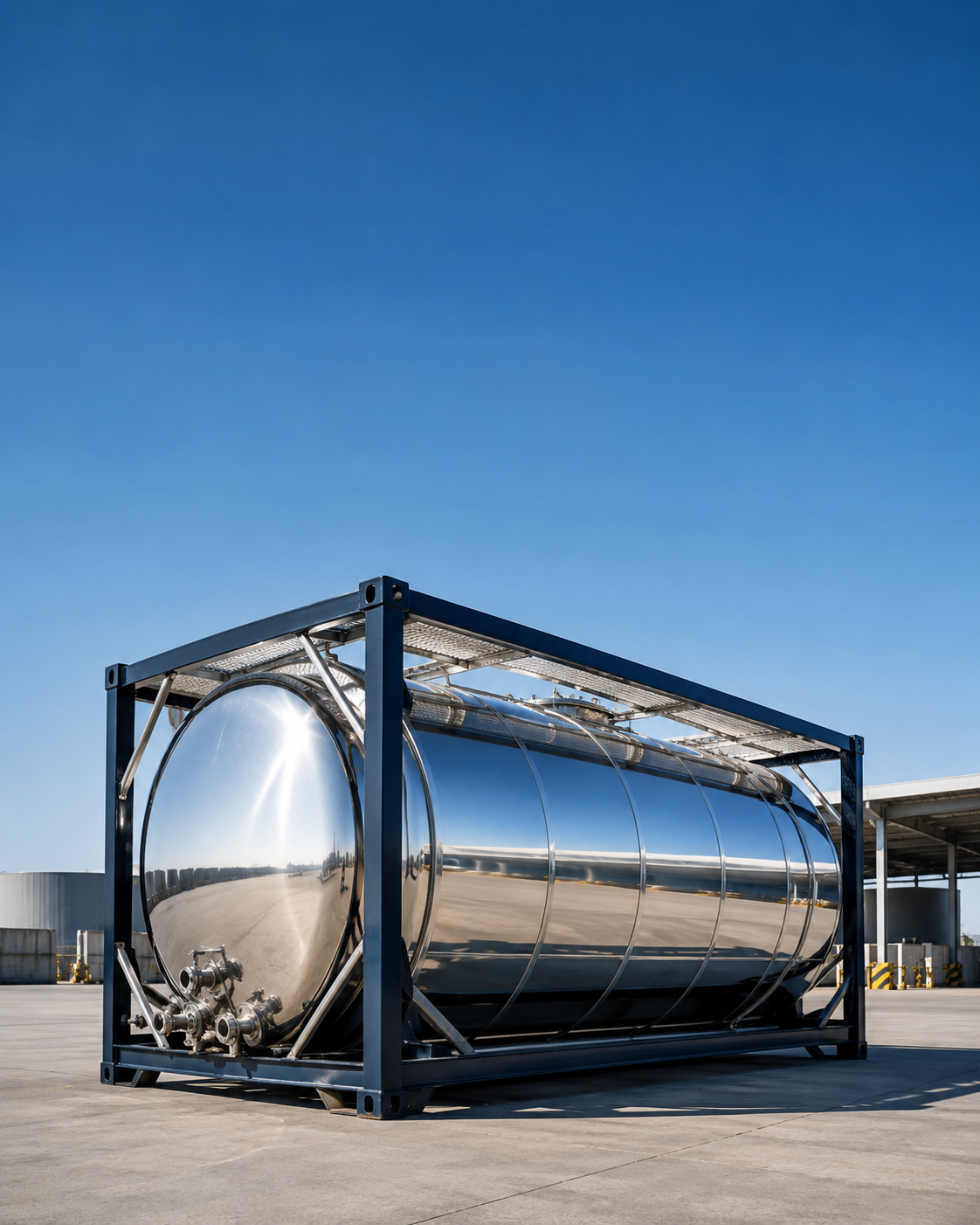
Essential Precautions & Mistakes to Avoid in ISO Tank Container Shipping
Most tank container problems trace back to a small number of recurring, preventable issues. None of them are exotic; they're the kind of gaps that happen when a team books a tank the same way it books a standard dry container, without accounting for the additional verification a pressure vessel requires. The five mistakes below account for the majority of avoidable delays and cost overruns seen on tank container shipments moving between China and the UAE.
For background on how tank containers are classified and constructed before diving into these operational pitfalls, see The Complete Guide to ISO Tank Containers.
Key Takeaways
- Booking a tank type that doesn't match the cargo's actual UN classification is the single most disruptive mistake, since it can stop a shipment at export.
- Cleaning history mismatches, expired certificates, underestimated positioning lead time, and valve fitting mismatches round out the most common preventable errors.
- Every one of these mistakes is avoidable with pre-booking checks that take a fraction of the time a resulting delay costs.
- Building a standard pre-booking checklist into the procurement process removes most of this risk without adding meaningful overhead to the booking workflow.
Mistake 1: Booking a Tank Type That Doesn't Match the Cargo's Classification
The most consequential mistake is booking a tank based on availability or price rather than the cargo's actual UN number and packing group. Every regulated substance has a minimum required T-code under the UN Model Regulations, and loading it into a tank that doesn't meet that minimum specification isn't just a compliance risk, it's grounds for the shipment being held or rejected at export.
This mistake often happens when a team assumes "a tank is a tank" and lets a broker or operator substitute whatever's available without confirming the substitution still meets the cargo's classification requirements. The fix is straightforward: confirm the UN number and packing group first, then match it against the tank's certified T-code before booking, not after the tank arrives at the loading facility.
Mistake 2: Ignoring the Tank's Cleaning History and Residue Compatibility
A tank that's structurally clean isn't necessarily chemically compatible with the next cargo. Residue from a prior chemical can contaminate an incompatible product even after a standard cleaning cycle, particularly when moving between unrelated chemical families or from an industrial cargo to a food-grade one. Shippers who don't review the tank's prior cargo history and cleaning certificate before accepting it risk a contaminated load that isn't discovered until it's already at the receiving facility.
The fix is to request the tank's cleaning certificate and prior cargo record as a standard part of the booking confirmation, and to flag any cargo combination that requires a specific decontamination or residue-testing standard rather than a routine rinse.
ISO Tank Container Shipping Costs vs Drums: A Full Economic Breakdown
Mistake 3: Missing the Tank's Test Certificate Expiry Date
Tank containers used for dangerous goods carry periodic inspection and pressure test certificates on a multi-year cycle. A tank that's out of test date can't legally be loaded with regulated cargo until it's re-certified, and this check is easy to overlook because the certificate expiry date isn't always front-of-mind during routine booking.
Teams that verify certificate validity only on loading day are the ones most likely to be caught out, since discovering an expired certificate at that point means the tank has to be pulled from the loading schedule and replaced, often at short notice. Confirming the certificate covers the full transit window, plus a reasonable delay buffer, at the time of booking removes this risk almost entirely.
Mistake 4: Underestimating Tank Positioning Lead Time
Tank container fleets are smaller and more specialized than general dry container fleets, and specialized types such as heated, insulated, or gas-rated (T50) tanks are a smaller subset still. Shippers who book a tank with the same lead time they'd use for a standard dry container often find the tank simply isn't available in time, particularly during periods of tight fleet availability or when requesting a less common tank type.
The fix is to build in more advance notice for tank bookings than for general cargo, and to confirm availability of the specific tank type needed, not just "a tank," at the time of initial planning rather than a week or two before the intended ship date.
Mistake 5: Mismatched Valve and Fitting Standards Between Tank and Facility
A tank's discharge valve and connection type need to match the receiving facility's unloading equipment, and this check is frequently skipped because it seems like a minor detail compared to classification and certification. When it's overlooked, the mismatch typically isn't discovered until the tank arrives for unloading, at which point sourcing an adapter or alternate connection can stall discharge by hours or days.
Confirming valve and fitting compatibility at both the loading and receiving facilities, as part of the same pre-booking check that covers classification and certification, closes this gap before it becomes a delay.
Tank Container Booking Checklist for Bulk Liquid Shipments
Why These Mistakes Cluster at the Booking Stage
All five mistakes share a common thread: they're checks that a standard dry container booking simply doesn't require, which means teams that don't specifically add them to their process tend to miss them. None of these require specialized expertise to catch, just a deliberate verification step built into the booking workflow before the tank is confirmed.
Frequently Asked Questions
Which of these five mistakes causes the most serious delays?
Classification mismatches (Mistake 1) tend to cause the most serious delays because they can stop a shipment at export customs, not just at the loading facility. The other four mistakes typically cause operational delays rather than compliance holds, though all five are preventable with the same basic pre-booking discipline.
Can a freight forwarder catch these issues before booking?
Yes, this is one of the main reasons shippers work with a forwarder experienced in tank container logistics rather than booking directly through a generalist. A forwarder familiar with dangerous goods classification and tank operations can flag mismatches during the booking process rather than after the tank arrives.
Conclusion
Every mistake on this list shares the same fix: verify before booking, not after the tank arrives. Classification matching, cleaning history, certificate validity, positioning lead time, and fitting compatibility are all checks that take minutes to confirm upfront and days to resolve if they're missed. Building them into a standard pre-booking process is the single most effective way to keep tank container shipments moving on schedule.
If you'd like a second set of eyes on a tank container booking before it ships, [INTERNAL-LINK: Request a freight quote and cargo assessment → contact/quote request page] and the team will run these checks against your cargo and documentation before confirming the tank.